India is entering a powerful new digital era. In 2026, artificial intelligence, automation, cloud computing, and advanced data modernization are transforming industries faster than ever before. From startups in Bengaluru to manufacturing hubs in Pune and smart farming initiatives in rural states, technology is becoming the backbone of economic growth.
The rise of AI is not just about robots or chatbots anymore. It is about smarter decision-making, efficient public services, better healthcare, personalized education, and faster business innovation. At the same time, data modernization is helping organizations move away from outdated systems and adopt agile, cloud-based infrastructures that support real-time intelligence.
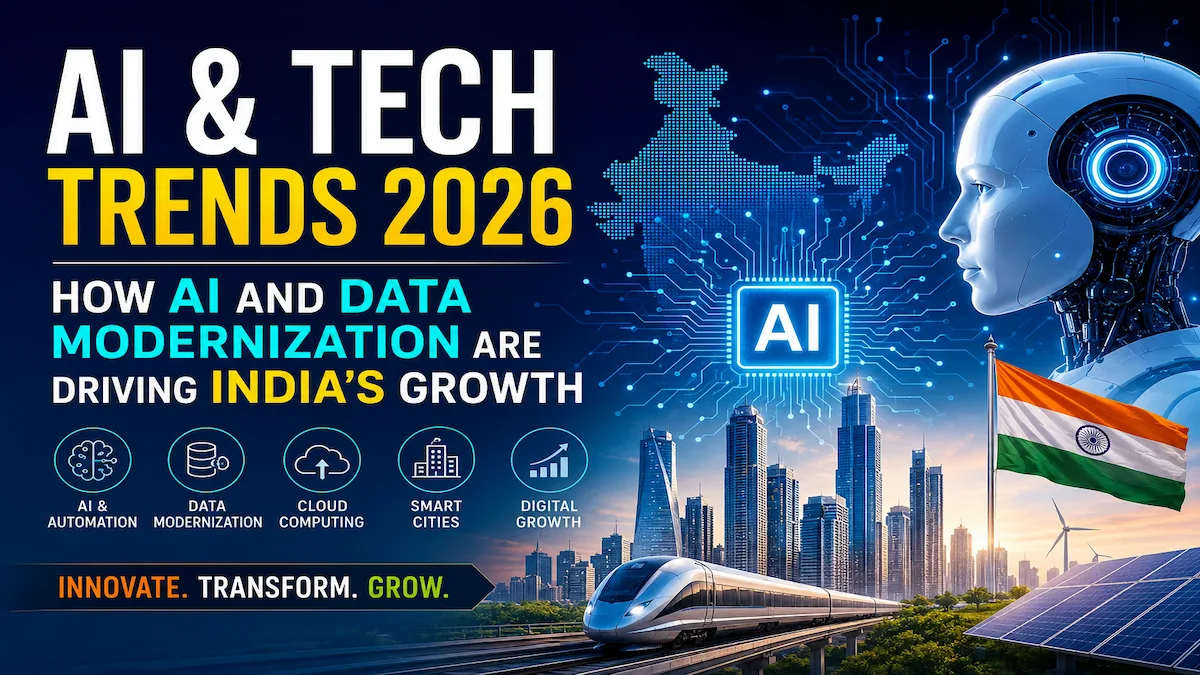
In this article, we will explore the biggest AI & Tech Trends 2026: How AI and Data Modernization Are Driving India’s Growth and why these trends are shaping the future of the country.
Introduction to India’s AI Revolution
India has become one of the fastest-growing digital economies in the world. Several factors are contributing to this AI revolution:
- Affordable internet access
- Rapid smartphone adoption
- Government-led digital initiatives
- Increased cloud infrastructure
- Rising startup investments
Programs like Digital India, Smart Cities Mission, and AI-focused innovation hubs are helping businesses adopt advanced technologies at scale. Companies across sectors are now using AI-powered tools to improve customer service, automate operations, and reduce costs.
India’s growing young workforce also gives the nation a competitive advantage. Millions of students and professionals are learning machine learning, data science, cybersecurity, and cloud engineering skills.
Why Data Modernization Matters in 2026
Data is often called the “new oil,” but raw data alone has little value unless businesses can process and use it effectively. That is where data modernization becomes essential.
Understanding Legacy Systems
Many traditional organizations still rely on outdated systems that are slow, expensive, and difficult to scale. These legacy infrastructures create several problems:
- Poor data accessibility
- Slow decision-making
- Security vulnerabilities
- High operational costs
- Limited automation capabilities
Modern businesses need systems that can handle massive amounts of information in real time.
Shift Toward Cloud-Native Infrastructure
Cloud-native technologies are helping Indian businesses become more flexible and scalable. Companies are moving data storage, analytics, and applications to secure cloud platforms.
Benefits include:
| Traditional Systems | Modernized Systems |
|---|---|
| Limited scalability | Elastic cloud scaling |
| Slow analytics | Real-time insights |
| High maintenance | Automated updates |
| Isolated databases | Unified data platforms |
Major industries including banking, telecom, healthcare, and e-commerce are investing heavily in data modernization strategies.
For additional insights on AI technologies, visit IBM AI Solutions.
The Role of Artificial Intelligence in India’s Economic Expansion
Artificial intelligence is contributing significantly to India’s GDP growth. AI systems are increasing productivity, reducing operational costs, and improving customer experiences across industries.
AI in Manufacturing
Factories are becoming smarter with AI-driven automation. Predictive maintenance systems can identify machine failures before they happen, reducing downtime and improving efficiency.
Robotic process automation is also helping manufacturers:
- Improve product quality
- Reduce waste
- Optimize supply chains
- Increase production speed
AI in Agriculture
India’s agricultural sector is undergoing major technological transformation. AI-powered solutions help farmers analyze soil quality, monitor weather patterns, and improve crop yields.
Modern agriculture technologies include:
- Smart irrigation systems
- Drone crop monitoring
- AI-based pest detection
- Climate prediction tools
These innovations are especially important as climate change affects farming conditions.
AI in Healthcare
Healthcare is becoming more accessible through AI technologies. Hospitals and clinics are using machine learning algorithms for:
- Early disease detection
- Medical imaging analysis
- Personalized treatment recommendations
- Virtual health assistants
Telemedicine platforms powered by AI are helping rural populations access healthcare services more efficiently.
Smart Cities and Digital Infrastructure
India’s smart city projects are expanding rapidly in 2026. Urban centers are using AI and IoT technologies to improve transportation, safety, energy management, and public services.
AI-Powered Urban Planning
City planners are using data analytics to understand traffic flow, population growth, and infrastructure needs. AI systems can recommend better road layouts and optimize public transportation networks.
Intelligent Traffic and Energy Systems
Smart traffic systems reduce congestion using real-time monitoring and adaptive traffic signals.
Meanwhile, AI-powered energy grids help cities:
- Reduce electricity waste
- Monitor energy usage
- Improve sustainability
- Detect outages faster
These technologies create more efficient and environmentally friendly urban environments.
Generative AI and Business Automation
Generative AI is one of the biggest breakthroughs in 2026. Businesses are using AI models to create content, automate communication, and improve productivity.
AI Assistants in Enterprises
AI-powered assistants are helping employees complete repetitive tasks such as:
- Scheduling meetings
- Writing reports
- Managing emails
- Analyzing business data
This allows workers to focus on strategic and creative tasks instead.
Automated Customer Experiences
Customer service is becoming faster and more personalized with AI chatbots and virtual agents.
Benefits include:
- 24/7 support
- Faster response times
- Personalized recommendations
- Reduced support costs
Retailers, banks, airlines, and telecom companies are increasingly investing in conversational AI systems.
India’s Startup Ecosystem and AI Innovation
India’s startup ecosystem continues to thrive in 2026. Thousands of AI-driven startups are emerging in sectors like fintech, healthtech, agritech, edtech, and logistics.
Rise of Deep-Tech Startups
Deep-tech startups focus on advanced technologies such as:
- Artificial intelligence
- Robotics
- Quantum computing
- Blockchain
- Cybersecurity
Investors are showing strong interest in companies building scalable AI products for global markets.
Government Support for Innovation
Government initiatives are supporting entrepreneurship through:
- Startup incubators
- AI research grants
- Innovation labs
- Skill development programs
This support is helping India position itself as a global technology leader.
Cybersecurity and Ethical AI Challenges
As AI adoption increases, cybersecurity risks and ethical concerns are also growing.
Data Privacy Concerns
Organizations collect massive amounts of user data. Without proper safeguards, this information can become vulnerable to breaches and misuse.
Key concerns include:
- Unauthorized surveillance
- Identity theft
- Data leaks
- Algorithmic bias
Responsible AI Governance
Businesses and governments are now focusing on ethical AI frameworks that ensure:
- Transparency
- Accountability
- Fairness
- Human oversight
Responsible AI development is essential for maintaining public trust.
AI and the Future of Jobs in India
Technology is reshaping the job market across India.
Emerging Tech Careers
Demand is increasing for professionals in fields such as:
| Emerging Role | Key Skill |
|---|---|
| AI Engineer | Machine Learning |
| Data Scientist | Analytics |
| Cloud Architect | Cloud Infrastructure |
| Cybersecurity Analyst | Security Management |
| Prompt Engineer | Generative AI |
These careers offer strong salary growth and global opportunities.
Reskilling and Upskilling Workforce
To stay competitive, workers must continuously update their skills. Online learning platforms and corporate training programs are becoming more popular.
Important future-ready skills include:
- Data analysis
- AI programming
- Cloud computing
- Cybersecurity
- Digital communication
Data Modernization Strategies for Enterprises
Businesses are adopting advanced strategies to handle increasing amounts of data efficiently.
Real-Time Analytics
Organizations want instant insights for faster decision-making.
Real-time analytics help companies:
- Track customer behavior
- Detect fraud instantly
- Monitor operations continuously
- Improve forecasting accuracy
Hybrid Cloud and Edge Computing
Hybrid cloud systems combine private and public cloud environments, offering flexibility and security.
Edge computing processes data closer to devices, reducing delays and improving performance for applications like:
- Smart factories
- Autonomous vehicles
- IoT sensors
- Healthcare monitoring systems
AI in Education and Skill Development
Education technology is rapidly evolving with AI-powered learning systems.
Personalized Learning Platforms
AI can analyze student performance and recommend customized learning paths.
Benefits include:
- Faster learning
- Improved engagement
- Better academic performance
- Individualized support
Virtual Tutors and AI Labs
Virtual tutors provide interactive learning experiences 24/7. AI labs also allow students to practice coding, robotics, and machine learning in simulated environments.
These innovations are helping bridge educational gaps in remote areas.
Sustainability Through AI and Green Technology
AI is playing an important role in environmental sustainability.
Energy Optimization
Smart systems can monitor and reduce energy consumption in buildings, factories, and cities.
AI helps organizations:
- Lower carbon emissions
- Reduce operational waste
- Improve energy efficiency
Smart Agriculture and Climate Monitoring
AI-driven climate analysis tools help predict environmental changes and natural disasters more accurately.
Farmers benefit from:
- Precision farming
- Water conservation
- Soil monitoring
- Weather forecasting
These technologies support long-term sustainable development goals.
Also Read: Claude Design Explained: What It Is, How It Works & Why Everyone Is Talking About It
FAQs
-
What is data modernization?
Data modernization is the process of upgrading outdated data systems and infrastructure to modern cloud-based, scalable, and analytics-driven platforms.
-
How is AI helping India grow economically?
AI improves productivity, automates processes, enhances customer experiences, and drives innovation across industries such as healthcare, agriculture, finance, and manufacturing.
-
Which industries benefit the most from AI in India?
Healthcare, banking, manufacturing, education, agriculture, and e-commerce are among the biggest beneficiaries of AI technologies.
-
What are the biggest AI trends in 2026?
Major trends include generative AI, predictive analytics, intelligent automation, edge computing, smart cities, and AI-powered cybersecurity.
-
Will AI replace jobs completely?
AI will automate certain repetitive tasks, but it will also create new career opportunities requiring advanced digital and analytical skills.
-
Why is cloud computing important for data modernization?
Cloud computing provides scalability, flexibility, cost savings, and real-time access to data, making modern business operations more efficient.
The future of India is being shaped by artificial intelligence and modern data ecosystems. AI & Tech Trends 2026: How AI and Data Modernization Are Driving India’s Growth clearly shows how technology is transforming industries, creating jobs, improving infrastructure, and driving innovation across the country.
Businesses that embrace AI, automation, and cloud technologies today will be better prepared for tomorrow’s digital economy. Meanwhile, individuals who invest in learning future-ready skills will gain access to exciting opportunities in the evolving tech landscape.
India’s journey toward becoming a global digital powerhouse is accelerating rapidly, and 2026 marks a defining chapter in that transformation.
Also Read: This AI Cat Stops Your Scrolling: Japanese Developer’s Chrome Extension Goes Viral
For more latest updates on Trending News, Automobile, Education, Technology, Jobs, weather and sports visit IndicDaily.