Dengue fever remains one of the world’s fastest-spreading vector-borne diseases, putting nearly half of the global population at risk each year. Transmitted primarily by the Aedes aegypti mosquito, the dengue virus causes severe flu-like symptoms, high fever, intense joint pain—often called “breakbone fever”—and can escalate into life-threatening conditions like Dengue Hemorrhagic Fever (DHF) or Dengue Shock Syndrome (DSS).
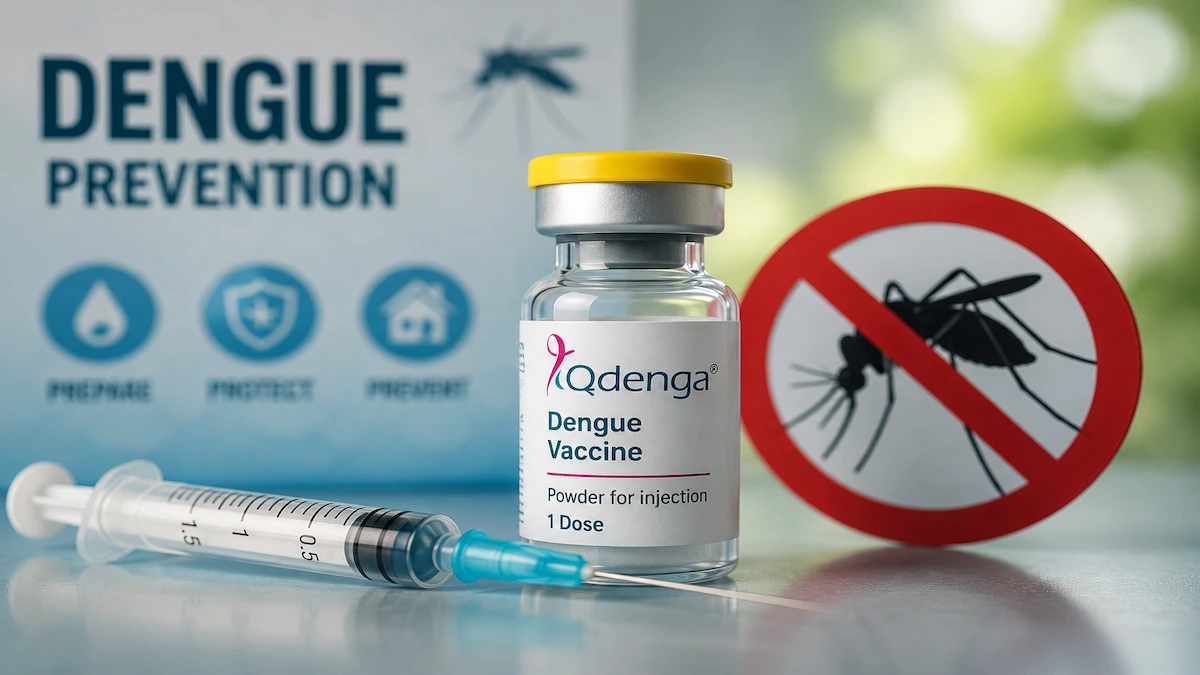
For decades, developing an effective vaccine against dengue was a major medical hurdle due to the disease’s four distinct serotypes (DEN-1, DEN-2, DEN-3, and DEN-4). However, the arrival of Qdenga Dengue Vaccine(TAK-003), a tetravalent live-attenuated vaccine developed by Takeda Pharmaceuticals, marks a major milestone in global public health and the fight against mosquito-borne illnesses.
This guide breaks down everything you need to know about the Qdenga vaccine: how it works, its clinical efficacy, its current global availability, safety protocols, and how it compares to earlier vaccines.
What is Qdenga (TAK-003)?
Qdenga is a second-generation, tetravalent live-attenuated vaccine designed to protect against all four serotypes of the dengue virus.
Unlike its predecessor, Dengvaxia (developed by Sanofi Pasteur), which required pre-vaccination screening to verify prior dengue exposure, Qdenga can be administered to individuals regardless of their past dengue infection history.
How Qdenga Works
The vaccine is built on a attenuated dengue serotype 2 (DEN-2) genetic backbone. This core framework provides the structural foundation, while engineered genetic material from serotypes 1, 3, and 4 is incorporated to create a single vaccine that triggers an immune response against all four strains.
Clinical Efficacy: How Effective is Qdenga?
Qdenga’s approval by regulatory bodies—including the European Medicines Agency (EMA) and the World Health Organization (WHO)—is backed by extensive clinical trials, notably the landmark Phase 3 TIDES (TETRAVALENT IMMUNIZATION AGAINST DENGUE EFFICACY STUDY) trial involving over 20,000 children and adolescents in endemic regions across Latin America and Asia.
The long-term clinical trial data demonstrates strong performance metrics:
1. Protection Against Symptomatic Dengue
Clinical trial data shows that Qdenga delivers an overall efficacy of 61.2% in preventing symptomatic dengue fever across all four serotypes combined.
2. Prevention of Hospitalization
Where Qdenga excels is in preventing severe disease complications. The vaccine demonstrated an impressive 84.1% overall efficacy in preventing dengue-related hospitalizations, making it an effective tool for preventing healthcare systems from becoming overwhelmed during seasonal outbreaks.
3. Efficacy by Serotype and Past Exposure
- DEN-2 Dominance: The vaccine shows its highest efficacy against the DEN-2 serotype (over 90% protection against hospitalization).
- DEN-1 & DEN-3: Delivers strong protective antibody responses against symptomatic cases.
- Serostatus Independence: Long-term follow-up confirms that the vaccine provides significant protective benefits to both seropositive (previously infected) and seronegative (dengue-naive) individuals.
Dosing Schedule and Administration
To achieve optimal, long-lasting immunity, Qdenga requires a structured two-dose regimen:
| Parameter | Specification |
| Route of Administration | Subcutaneous injection (typically upper arm) |
| Dose Volume | 0.5 mL per injection |
| Number of Doses | 2 Doses |
| Dosing Interval | 3 Months Apart (Day 0 and Month 3) |
| Approved Age Bracket | Generally approved for individuals aged 4 to 60 years (varies by region) |
Key Takeaway: Full protective immunity develops after completing both doses. It is crucial for recipients to follow the 3-month gap precisely to ensure robust long-term antibody retention.
Who Should Get the Qdenga Vaccine?
Public health agencies, including the WHO’s Strategic Advisory Group of Experts (SAGE) on Immunization, recommend the introduction of Qdenga primarily in high dengue transmission areas and endemic regions.
Primary Candidates:
- Residents in Endemic Areas: Children, adolescents, and adults living in tropical and subtropical regions where seasonal dengue surges occur regularly.
- International Travelers: Frequent travelers, expats, or military personnel visiting or relocating to high-risk dengue zones for extended periods.
- Both Previously Infected & Infection-Naive People: Individuals who have already recovered from a past bout of dengue—as well as those who have never had it—can safely receive Qdenga without requiring baseline blood antibody tests.
Who Should AVOID Qdenga (Contraindications)?
Because Qdenga is a live-attenuated vaccine, it is not suitable for everyone:
- Pregnant & Breastfeeding Women: Live virus vaccines pose theoretical risks to fetal development and nursing infants.
- Immunocompromised Individuals: People undergoing chemotherapy, taking high-dose immunosuppressants, or living with advanced HIV/AIDS should not receive live-attenuated vaccines.
- Severe Allergic Reactions: Anyone with a history of severe anaphylactic reactions to any component of the vaccine.
Side Effects and Safety Profile
Across extensive global safety surveillance, Qdenga has shown a favorable, well-tolerated safety profile. The majority of reported side effects are mild to moderate and resolve within a few days after administration.
Common Local Side Effects (Injection Site)
- Pain or tenderness
- Redness (erythema)
- Mild swelling
Common Systemic Side Effects
- Mild headache
- Muscle pain (myalgia)
- Low-grade fever
- General fatigue or malaise
Global Availability and Pricing
Since receiving its initial regulatory approvals, Takeda has been scaling up the global manufacturing and distribution of Qdenga to reach endemic countries and travel health clinics worldwide.
1. Europe and Travel Health Clinics
The European Medicines Agency (EMA) approved Qdenga in late 2022. It is widely available across European countries (including the UK, Germany, and France) primarily through travel health clinics for outbound travelers visiting endemic destinations.
2. Endemic Latin America and Southeast Asia
Qdenga has received regulatory approval and public health rollouts in several high-risk countries across Latin America (such as Brazil and Argentina) and Southeast Asia (including Indonesia, Thailand, and Malaysia). Brazil became one of the first nations to incorporate Qdenga into its public healthcare system (SUS) to combat surging outbreak cycles.
3. Price Expectations
Vaccine pricing varies significantly depending on local healthcare subsidies, country-specific distribution networks, and whether it is acquired via public health drives or private clinics:
- Private Clinics (Travel Medicine): In developed markets and private hospitals, prices typically range from $80 to $130 per dose (totaling $160–$260 for the complete two-dose course).
- Public Health Programs: Subsidized government programs in select endemic countries provide the vaccine at reduced rates or free of charge for targeted vulnerable age brackets.
A Major Step Forward in Dengue Prevention
While traditional vector control methods like mosquito abatement, removing standing water, and using insect repellents remain vital front-line defenses, vector control alone has proven insufficient to stop rising global dengue trends.
The introduction of the Qdenga vaccine provides a powerful new biological defense. By offering reliable protection against hospitalization for both previously infected and dengue-naive individuals without requiring complex pre-screening tests, Qdenga represents a major step forward toward reducing the global burden of dengue fever.
FAQs: Qdenga Dengue Vaccine
Q1: Is Qdenga safer than Dengvaxia?
Yes, Qdenga’s clinical design offers a major safety advantage over Dengvaxia. Dengvaxia carried a risk of triggering severe dengue symptoms if given to people who had never been infected before (seronegative individuals). Qdenga, however, has been proven safe and effective for both seronegative and seropositive individuals without requiring pre-vaccination blood tests.
Q2: How long does protection from Qdenga last?
Long-term clinical trial data indicates that Qdenga provides strong protective immunity for at least 4 to 5 years following completion of the full 2-dose series. Ongoing studies continue to evaluate whether booster shots will be beneficial later in life.
Q3: Can I get dengue even after receiving both doses of Qdenga?
While Qdenga significantly reduces the likelihood of catching dengue (reducing overall symptomatic cases by over 60%), no vaccine is 100% preventive. However, if a vaccinated individual does catch dengue, the vaccine drastically lowers the risk of severe disease, high fever, and hospitalization by over 84%.
Q4: How long after a dengue infection should I wait to get Qdenga?
Health authorities generally recommend waiting at least 6 months after recovering from a natural dengue infection before starting the Qdenga vaccine series. This allows your natural immune response to settle and optimizes the vaccine’s antibody production.