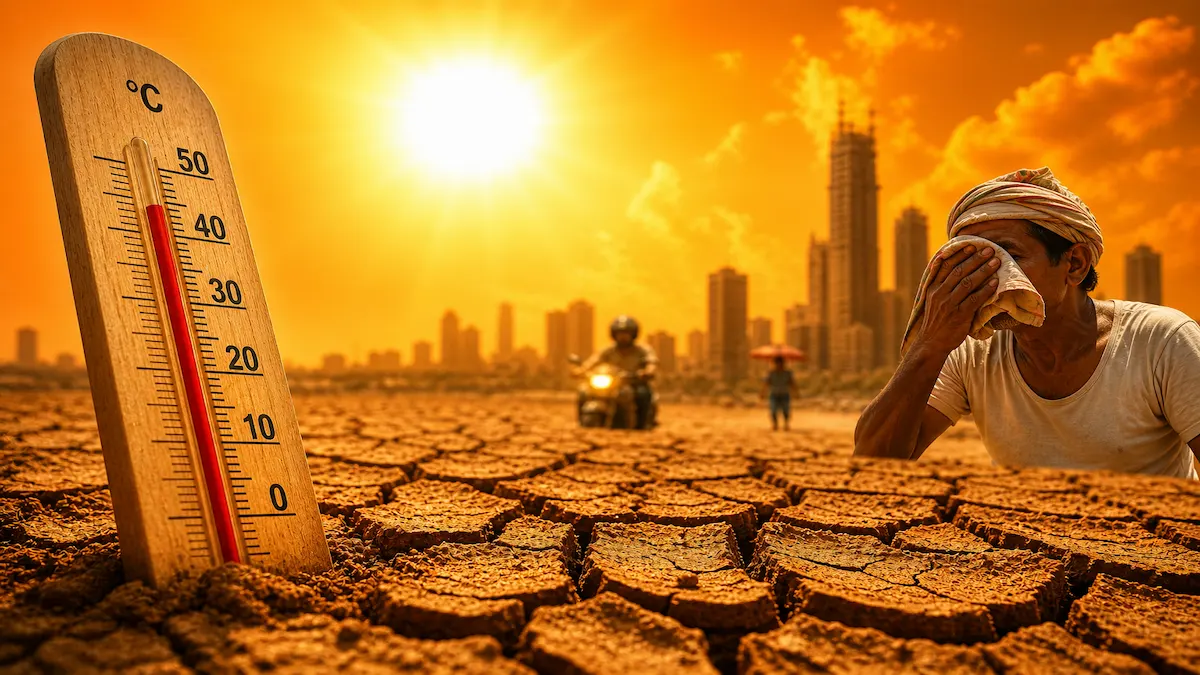
Every summer, several parts of India experience dangerously high temperatures that go beyond normal seasonal heat. These extreme conditions are officially classified as heatwaves, and they can pose serious risks to health, agriculture, and daily life.
But what exactly is a heatwave? How does the India Meteorological Department define it? And what rules are used to declare a heatwave in India?
This detailed guide explains everything you need to know in simple language, including IMD criteria, causes, impacts, and safety measures.
What Is a Heatwave?
A heatwave is a prolonged period of excessively hot weather, often combined with high humidity, that significantly exceeds normal temperatures for a region. It is not just about feeling hot — it is a scientifically measured condition based on temperature thresholds.
In India, heatwaves are officially declared based on specific criteria set by the India Meteorological Department (IMD).
Why Heatwaves Are a Serious Concern in India
India is particularly vulnerable to heatwaves due to:
- Tropical climate
- Dense population
- Urban heat islands
- Water scarcity in many regions
In recent years, rising temperatures have been linked to Climate Change, making heatwaves more frequent and intense.
IMD Rules for Declaring a Heatwave
The IMD uses a well-defined system based on temperature thresholds and deviations from normal temperatures.
1. Based on Maximum Temperature
A heatwave is declared when:
- Temperature reaches 40°C or more in plains
- Temperature reaches 30°C or more in hilly regions
- Temperature reaches 37°C or more in coastal areas
2. Based on Departure from Normal Temperature
If the temperature is significantly higher than the normal average:
- +4.5°C to +6.4°C above normal → Heatwave
- More than +6.4°C above normal → Severe heatwave
3. Absolute Temperature Criteria
Regardless of normal temperature:
- 45°C or above → Heatwave
- 47°C or above → Severe heatwave
This is one of the most critical indicators used by IMD.
What Is a Severe Heatwave?
A severe heatwave is a more dangerous version of a heatwave where temperatures are extremely high and can lead to serious health risks such as heatstroke and dehydration.
Conditions include:
- Very high absolute temperatures
- Large deviation from normal
- Extended duration
Duration Criteria
For a heatwave to be officially declared:
- It must persist for at least 2 consecutive days
- IMD usually confirms it on the second day
This ensures that temporary spikes are not misclassified as heatwaves.
Regions Most Affected in India
Heatwaves are most common in:
- Northern India (Delhi, Uttar Pradesh, Rajasthan)
- Central India (Madhya Pradesh, Chhattisgarh)
- Parts of Maharashtra
- Eastern states like Bihar and Jharkhand
Cities often experience worse conditions due to the urban heat island effect.
What Causes Heatwaves?
Heatwaves are caused by a combination of natural and human factors.
1. High Pressure Systems
Hot air gets trapped in an area, preventing cooling.
2. Dry Winds
Hot winds like “loo” increase temperature rapidly.
3. Lack of Rainfall
No clouds or rain leads to direct solar heating.
4. Climate Change
Global warming is increasing the frequency and intensity of heatwaves.
Heatwave vs Normal Summer Heat
| Factor | Normal Heat | Heatwave |
|---|---|---|
| Temperature | High but expected | Extremely high |
| Duration | Short | Prolonged |
| Health Risk | Moderate | Severe |
| IMD Declaration | No | Yes |
Health Risks During Heatwaves
Heatwaves can be dangerous, especially for vulnerable groups.
Common Health Issues:
- Dehydration
- Heat exhaustion
- Heatstroke
- Dizziness and fatigue
- Sunburn
High-Risk Groups:
- Children
- Elderly people
- Outdoor workers
- People with chronic illnesses
Symptoms of Heatstroke
Heatstroke is a medical emergency. Watch out for:
- Body temperature above 40°C
- Confusion or unconsciousness
- Rapid heartbeat
- No sweating despite heat
Immediate medical attention is required.
How to Stay Safe During a Heatwave
1. Stay Hydrated
Drink water regularly, even if not thirsty.
2. Avoid Peak Sun Hours
Stay indoors between 12 PM and 4 PM.
3. Wear Light Clothing
Use loose, cotton clothes.
4. Use Sun Protection
Hats, sunglasses, and sunscreen help reduce exposure.
5. Eat Light Meals
Avoid heavy, oily foods.
6. Keep Home Cool
Use curtains, fans, or air conditioning.
Government Measures During Heatwaves
Authorities take several steps:
- Issuing heat alerts
- Opening cooling centers
- Providing water facilities
- Adjusting school/work timings
The IMD plays a key role in early warning systems.
Role of IMD in Heatwave Management
The India Meteorological Department (IMD) monitors weather patterns and issues:
- Heatwave warnings
- Temperature forecasts
- Regional alerts
These warnings help governments and citizens prepare in advance.
Impact of Heatwaves on Daily Life
Heatwaves affect multiple sectors:
1. Agriculture
Crops can fail due to extreme heat.
2. Water Supply
Increased demand leads to shortages.
3. Power Demand
Higher use of ACs increases electricity consumption.
4. Economy
Outdoor work slows down, affecting productivity.
Heatwaves and Climate Change
Scientists widely agree that climate change is making heatwaves:
- More frequent
- Longer lasting
- More intense
This makes understanding and preparing for heatwaves more important than ever.
Future of Heatwaves in India
Experts predict that:
- Heatwaves will start earlier in the year
- More regions will be affected
- Urban areas will face extreme heat stress
This calls for better planning, infrastructure, and awareness.
A heatwave is not just hot weather—it is a serious environmental and public health event. The IMD rules help define and track these conditions scientifically, ensuring timely warnings and preventive action.
With rising temperatures and climate change, understanding heatwaves is no longer optional. Awareness and preparation are the best ways to stay safe.
Also Read: Indian Ocean Dipole 2026: Can It Save India’s Monsoon? Current Status and Big Impact Explained
Frequently Asked Questions (FAQs)
-
What exactly constitutes a “heatwave” according to the IMD?
According to the India Meteorological Department (IMD), a heatwave is a period of abnormally high temperatures. It is formally declared based on two distinct conditions:
By Departure from Normal: The maximum temperature must show a departure of 4.5°C to 6.4°C above the region’s historical normal temperature.
By Actual Maximum Temperature: Regardless of the normal averages, a heatwave is automatically declared if the actual maximum temperature hits 45°C or higher in the plains. -
How do the IMD heatwave criteria differ across plains, hills, and coastal regions?
Because different terrains have varying baseline temperatures, the IMD applies specific geographic thresholds before a heatwave can be officially declared:
Plains: The maximum temperature must reach at least 40°C.
Coastal Regions: The maximum temperature must touch at least 37°C.
Hilly Regions: The maximum temperature must reach at least 30°C. -
When does a standard heatwave upgrade to a “Severe Heatwave”?
The IMD upgrades a standard heatwave warning to a Severe Heatwave under two scenarios:
Severe Departure: When the maximum temperature exceeds the historical normal average by 6.5°C or more.
Extreme Temperatures: When the actual recorded maximum temperature reaches or crosses a blistering 47°C anywhere in the plains. -
What is a “Warm Night” warning, and why does the IMD issue it?
A “Warm Night” warning is issued during an ongoing heatwave if the minimum (nighttime) temperature stays significantly above average. Specifically, it is declared if the nighttime temperature shows a departure of 4.5°C to 6.4°C above normal, and the daytime maximum temperature has already crossed 40°C. Warm nights prevent the human body from cooling down and recovering, drastically increasing the risk of heat exhaustion.
-
What do the IMD’s color-coded heatwave alerts (Yellow, Orange, Red) mean?
The IMD utilizes a four-tier color system to communicate the severity of extreme heat and direct public safety actions:
🟢 Green (No Action): Normal comfort levels; no extreme conditions.
🟡 Yellow (Be Updated): A heatwave is expected for 2 days. The general public should monitor updates, especially vulnerable groups like infants and the elderly.
🟠 Orange (Be Prepared): A severe heatwave or a standard heatwave lasting more than 4 days is expected. High health risks for people exposed to sun; take precautions against dehydration.
🔴 Red (Take Action): A severe heatwave lasting more than 2 days or a total heatwave window exceeding 6 days. This indicates an extreme health emergency requiring immediate intervention and protection.
For more latest updates on Trending News, Entertainment, Automobile, Education, Technology, Jobs, weather and sports visit IndicDaily.