
In recent years, the world has become increasingly aware of infectious diseases that originate from animals and spread to humans. Among these, hantavirus has gained attention due to its potentially severe impact on human health. Although it is not as widespread as many other viral infections, hantavirus is known for causing serious illness with a relatively high fatality rate in some cases.
With occasional reports and updates emerging globally, understanding hantavirus has become important not only for healthcare professionals but also for the general public. This article provides a complete, detailed explanation of what hantavirus is, how it spreads, its symptoms, types, latest updates, and most importantly, how you can protect yourself and your family.
What Is Hantavirus?
Hantavirus is a group of viruses primarily carried by rodents such as rats and mice. These animals do not usually show symptoms of illness, but they can spread the virus to humans through their urine, droppings, or saliva. When humans come into contact with contaminated materials or breathe in particles carrying the virus, infection can occur.
Unlike many other viruses, hantavirus is not commonly transmitted from person to person. Instead, it is considered a zoonotic disease, meaning it spreads from animals to humans. This makes environmental exposure a key factor in infection.
The virus can lead to two major types of diseases:
- Hantavirus Pulmonary Syndrome (HPS), which affects the lungs
- Hemorrhagic Fever with Renal Syndrome (HFRS), which affects the kidneys
Both conditions can be severe and require immediate medical attention.
Why Hantavirus Is in the News in 2026
In 2026, hantavirus has once again come into public discussion as Hantavirus killed 3 person in Atlantic cruise ship. While there is no global outbreak, health authorities are emphasizing vigilance and awareness.
Several factors have contributed to renewed attention:
Environmental changes, including shifting weather patterns and habitat disruption, have increased interactions between humans and rodents. Urban expansion into rural areas has also brought people closer to rodent populations. Additionally, improved surveillance systems have made it easier to detect and report cases that may have previously gone unnoticed.
Experts are not suggesting panic but are encouraging preventive measures and awareness, especially in regions where rodent exposure is more common.
How Hantavirus Spreads
The primary mode of hantavirus transmission is through contact with infected rodents or their waste. When rodent droppings, urine, or saliva dry out, they can release virus particles into the air. Breathing in this contaminated air is one of the most common ways humans become infected.
People can also contract the virus by touching contaminated surfaces and then touching their eyes, nose, or mouth. In rare cases, rodent bites can transmit the virus.
It is important to note that hantavirus does not spread easily between humans. Unlike respiratory viruses such as influenza or COVID-19, human-to-human transmission is extremely rare and has only been observed in very limited situations.
Types of Hantavirus Diseases
Hantavirus infections are categorized into two major types based on the organs they affect and the regions where they are commonly found.
1. Hantavirus Pulmonary Syndrome (HPS)
HPS is primarily found in the Americas and is considered the more severe form of hantavirus infection. It affects the lungs and can lead to serious breathing difficulties. The condition can progress rapidly and may require intensive medical care.
HPS has a mortality rate of up to 38%, making it extremely dangerous.
2. Hemorrhagic Fever with Renal Syndrome (HFRS)
HFRS is more common in Europe and Asia. This form of the disease primarily affects the kidneys and can lead to complications such as kidney failure. While it can also be severe, its progression is often slower compared to HPS.
Symptoms of Hantavirus
The symptoms of hantavirus infection usually appear between one to eight weeks after exposure. The early stage of the disease often resembles common viral illnesses, which can make diagnosis challenging.
Initial symptoms typically include fever, fatigue, muscle aches, and headaches. Some individuals may also experience chills, nausea, and abdominal pain.
As the disease progresses, more severe symptoms can develop. In the case of HPS, patients may experience shortness of breath, coughing, and chest tightness due to fluid buildup in the lungs. For HFRS, symptoms may include low blood pressure, kidney dysfunction, and bleeding issues.
Because symptoms can worsen quickly, early medical attention is critical.
How Dangerous Is Hantavirus?
Hantavirus is considered a serious illness, particularly in its pulmonary form. The fatality rate for HPS can be significant if treatment is delayed. However, with early detection and proper medical care, survival rates improve considerably.
The severity of the disease depends on several factors, including the type of hantavirus, the patient’s overall health, and how quickly treatment begins.
Who Is Most at Risk?
Certain groups of people are more likely to be exposed to hantavirus due to their environment or occupation. These include farmers, construction workers, pest control professionals, and individuals living in rural or forested areas.
People who clean unused buildings, storage spaces, or areas where rodents may be present are also at higher risk. Campers and hikers who spend time in nature may encounter rodent habitats, increasing their exposure.
In countries like India, awareness is especially important in rural and semi-urban regions.
Diagnosis and Treatment
Diagnosing hantavirus involves a combination of medical history, exposure assessment, and laboratory tests such as blood analysis. Because early symptoms can resemble other illnesses, doctors rely heavily on patient history and possible exposure to rodents.
Currently, there is no specific antiviral treatment for hantavirus. Medical care focuses on supportive treatment, which may include oxygen therapy, fluid management, and intensive care support.
Patients who receive early treatment in hospitals have a much higher chance of recovery.
Prevention: The Best Defense
Since there is no specific cure or widely available vaccine, prevention remains the most effective way to avoid hantavirus infection.
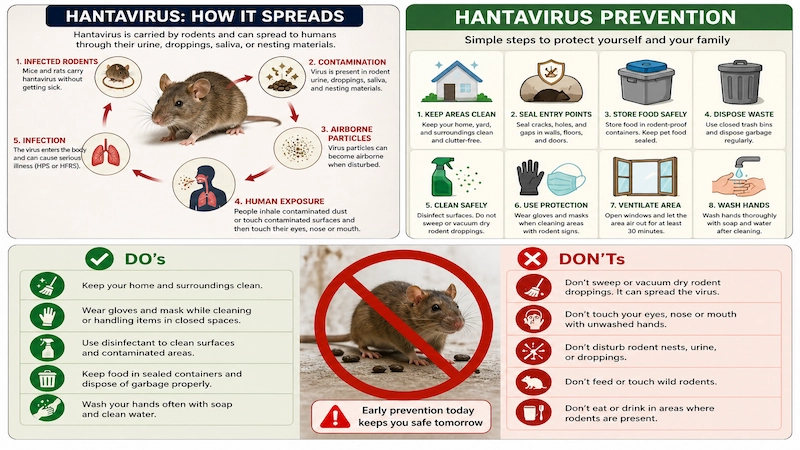
Keeping living spaces clean and free from rodents is essential. Sealing entry points in homes, storing food properly, and disposing of waste carefully can reduce the risk of rodent infestation.
When cleaning areas that may be contaminated, it is important to avoid sweeping or vacuuming dry dust, as this can release virus particles into the air. Instead, surfaces should be sprayed with disinfectant and cleaned using protective gloves and masks.
Proper hygiene, including regular handwashing, also plays a key role in prevention.
Hantavirus and Climate Change
Scientists believe that environmental changes, including climate change, may influence the spread of hantavirus. Changes in temperature and rainfall patterns can affect rodent populations, increasing their numbers and expanding their habitats.
This can lead to more frequent interactions between humans and rodents, raising the risk of infection. As a result, monitoring environmental conditions has become an important part of disease prevention.
Myths and Misconceptions
There are several misconceptions about hantavirus that can lead to unnecessary fear or misunderstanding. One common myth is that it spreads easily between people. In reality, such transmission is extremely rare.
Another misconception is that hantavirus only affects rural areas. While rural regions are more commonly associated with rodent exposure, urban areas can also be at risk if rodent infestations occur.
Some people also believe that hantavirus is always fatal. While it can be severe, early medical care significantly improves outcomes.
Hantavirus is a serious but preventable disease that highlights the importance of environmental hygiene and awareness. While it may not be as widespread as other viral infections, its potential severity makes it important to understand how it spreads and how it can be prevented.
By maintaining clean surroundings, avoiding contact with rodents, and seeking medical attention at the first sign of symptoms, individuals can greatly reduce their risk.
In a world where zoonotic diseases are becoming more prominent, staying informed and prepared is the best way to protect yourself and your community.
For official updates and verified global health alerts on hantavirus, check the latest report from the World Health Organization here: https://www.who.int/emergencies/disease-outbreak-news/item/2026-DON599
Frequently Asked Questions (FAQs)
-
What is hantavirus in simple words?
Hantavirus is a virus carried by rodents that can cause serious illness in humans.
-
How does hantavirus spread?
It spreads through contact with rodent droppings, urine, saliva, or contaminated air.
-
Is hantavirus deadly?
It can be serious, but early treatment improves survival chances.
-
Is there a cure for hantavirus?
There is no specific cure, but supportive medical care is available.
-
Can hantavirus spread from person to person?
In most cases, human-to-human transmission is extremely rare.
-
What are the early symptoms of hantavirus?
Early symptoms include fever, fatigue, muscle aches, headache, and chills, which may later progress to breathing problems or organ issues.
For more latest updates on Trending News, Automobile, Education, Technology, Jobs, weather and sports visit IndicDaily.