Illegal migration from the Bengal border has remained one of the most debated and sensitive subjects in South Asian public discourse. The issue encompasses security concerns, humanitarian considerations, demographic discussions, economic implications, and diplomatic relations. Given the complexity of the matter, simplistic explanations often fail to capture the multitude of factors that influence migration patterns.
Understanding the phenomenon requires a balanced examination of historical realities, geographical conditions, socio-economic drivers, and policy responses.
Understanding the Bengal Border
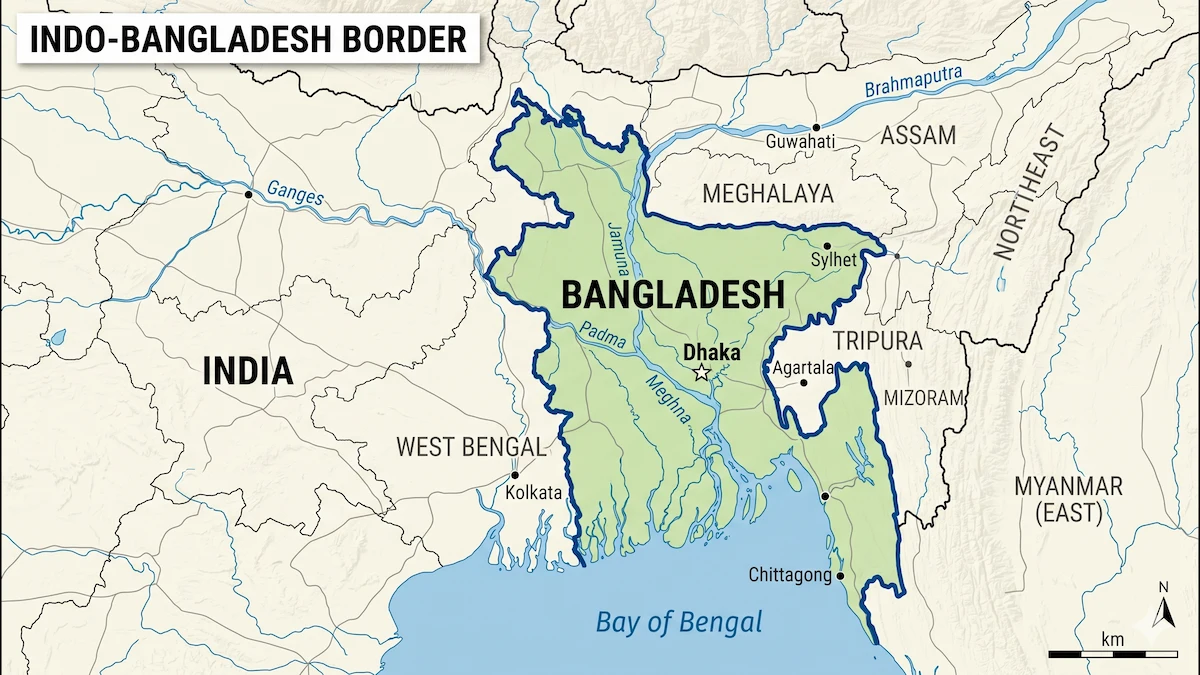
The term “Bengal border” generally refers to the extensive frontier shared between India and Bangladesh, particularly the sections adjoining West Bengal. This border is among the most densely populated international boundaries in the world.
Numerous villages, agricultural fields, rivers, and settlements lie close to the frontier. Such proximity creates unique challenges for border administration and migration management.
Historical Context of Cross-Border Movement
Population movement across the Bengal region predates modern national boundaries. For centuries, communities interacted through trade, agriculture, cultural exchanges, and family relationships.
The partition of British India in 1947 significantly altered the region’s demographic and political landscape. Subsequent historical developments, including the creation of Bangladesh in 1971, further shaped migration trends. These events left lasting social connections that continue to influence cross-border mobility.
The Geography of the India–Bangladesh Border
Geography plays a crucial role in migration dynamics. Large stretches of the border pass through riverine terrain, marshlands, agricultural areas, and densely inhabited settlements.
Unlike mountainous frontiers that naturally impede movement, many sections of the Bengal border present logistical challenges for surveillance. Seasonal river shifts and difficult terrain often complicate enforcement efforts.
What Constitutes Illegal Migration?
Illegal migration refers to the movement of individuals across an international border without complying with the immigration laws of the destination country.
This may involve unauthorized entry, use of fraudulent documentation, overstaying legal permits, or bypassing official checkpoints. Distinguishing between legal and illegal migration is essential for informed policy discussions.
Major Routes Used for Unauthorized Border Crossing
Unauthorized crossings may occur through unfenced areas, river channels, agricultural zones, and remote stretches of the border. Smuggling routes sometimes overlap with migration pathways.
Criminal networks may exploit geographical vulnerabilities, facilitating movement in exchange for financial compensation. Such operations complicate border security efforts and increase risks for migrants themselves.
Economic Factors Driving Migration
Economic disparities remain among the most influential drivers of migration worldwide. Individuals often move in search of employment opportunities, higher wages, or improved living conditions.
The attraction of urban labor markets, construction work, domestic employment, and informal-sector opportunities can motivate cross-border movement. Economic incentives frequently intersect with other social and environmental factors.
Population Pressure and Resource Constraints
Regions experiencing high population density may face increased competition for land, housing, employment, and public services.
When opportunities become limited, migration can emerge as a coping strategy. Although not the sole cause, population pressure can contribute to mobility decisions among economically vulnerable groups.
Environmental and Climate-Related Displacement
Climate change has emerged as a significant factor influencing migration patterns. Floods, riverbank erosion, cyclones, salinity intrusion, and extreme weather events can displace communities.
The Bengal delta is particularly vulnerable to environmental stress. When livelihoods dependent on agriculture or fishing become unsustainable, affected populations may seek opportunities elsewhere.
Social and Cultural Linkages Across the Border
The border divides communities that often share linguistic, cultural, and familial ties. Bengali language and cultural traditions transcend political boundaries.
Family networks can facilitate movement by providing housing, employment contacts, and social support. These pre-existing connections may reduce the perceived risks associated with migration.
The Role of Human Trafficking Networks
Human trafficking represents one of the most alarming aspects of unauthorized migration. Organized criminal groups may exploit vulnerable individuals, including women and children.
Victims are often lured through false promises of employment or better living conditions. Tackling trafficking requires coordinated law enforcement, social awareness, and victim protection mechanisms.
Security Concerns Associated with Illegal Migration
Governments frequently cite national security as a major concern related to illegal migration. Unregulated movement can complicate identity verification and law enforcement efforts.
Security agencies may worry about criminal infiltration, smuggling operations, document fraud, and other unlawful activities. Effective border governance seeks to address these concerns while respecting legal and humanitarian obligations.
Impact on Border States
Border states often experience the most direct consequences of migration flows. Administrative agencies may face increased demands related to documentation, policing, welfare services, and local governance.
The intensity of these impacts can vary significantly depending on migration patterns, economic conditions, and local demographic characteristics.
Demographic Changes and Public Debate
Migration frequently becomes a focal point in discussions about demographic transformation. Public debates often revolve around population growth, settlement patterns, electoral implications, and cultural integration.
Because demographic issues can be politically sensitive, evidence-based analysis is essential to avoid misinformation and polarization.
Effects on Employment and Local Economies
The economic impact of migration is a subject of ongoing academic debate. Some observers argue that migrant labor can fill workforce shortages and contribute to economic activity.
Others express concerns regarding wage competition, employment opportunities, and informal labor markets. Actual outcomes often depend on regional economic conditions and labor demand.
Strain on Public Infrastructure and Services
Rapid population growth in specific localities may increase pressure on housing, healthcare facilities, educational institutions, transportation networks, and public utilities.
Local administrations may encounter challenges in planning and resource allocation when population changes occur outside formal registration systems.
Political Dimensions of the Migration Issue
Migration frequently emerges as a major political topic during elections and policy debates. Different political groups may emphasize varying aspects of the issue, including security, economic development, humanitarian concerns, or citizenship policies.
As a result, migration often occupies a prominent position in public discourse.
Border Management and Surveillance Measures
India has invested significantly in strengthening border management through fencing, patrol operations, floodlighting, surveillance systems, and enhanced infrastructure.
These measures aim to reduce unauthorized crossings while improving operational efficiency. However, the length and complexity of the border continue to present challenges.
Legal Framework Governing Immigration
Immigration regulation operates through a combination of domestic laws, administrative procedures, and international obligations.
Legal frameworks establish rules regarding entry, residence, citizenship, deportation, and documentation. Effective implementation depends on accurate identification systems and administrative capacity.
The National and International Perspective
Illegal migration is not unique to South Asia. Similar challenges exist across many regions of the world, including North America, Europe, Africa, and the Middle East.
International experience demonstrates that migration management requires a combination of border security, economic development, diplomatic cooperation, and humanitarian safeguards.
Challenges in Identifying Illegal Migrants
One of the most difficult aspects of migration governance involves determining legal status. Documentation gaps, identity disputes, and administrative complexities can create significant obstacles.
Authorities must balance enforcement objectives with procedural fairness and legal protections.
Humanitarian Considerations
Migration discussions often focus on security and policy. However, humanitarian realities remain equally important.
Many migrants may be driven by poverty, environmental disasters, family reunification needs, or personal hardship. Policymakers therefore face the challenge of addressing human suffering while maintaining legal immigration systems.
Bilateral Cooperation Between India and Bangladesh
Constructive cooperation between India and Bangladesh is essential for long-term solutions. Information sharing, coordinated border management, anti-trafficking initiatives, and economic partnerships can contribute to better outcomes.
Diplomatic engagement remains a cornerstone of sustainable migration management.
Technological Solutions for Border Security
Modern technology is transforming border administration. Drones, thermal imaging systems, smart fencing, satellite monitoring, biometric databases, and artificial intelligence can improve surveillance capabilities.
These tools enhance situational awareness while enabling more efficient deployment of security resources.
Policy Recommendations
Several policy measures may help address illegal migration effectively:
- Strengthen border infrastructure and surveillance.
- Improve identity verification systems.
- Enhance bilateral cooperation mechanisms.
- Expand anti-trafficking operations.
- Promote economic development in vulnerable regions.
- Improve data collection and migration research.
- Ensure humane treatment consistent with legal standards.
- Invest in climate resilience programs.
A multidimensional approach is generally more effective than relying solely on enforcement measures.
Future Outlook
Migration pressures are likely to remain influenced by economic disparities, demographic trends, environmental challenges, and regional development patterns.
Technological innovation, diplomatic cooperation, and evidence-based policymaking will play increasingly important roles in shaping future outcomes.
Illegal migration from the Bengal border represents a multifaceted issue that extends beyond simple narratives. Historical connections, economic motivations, environmental pressures, security concerns, and humanitarian realities all contribute to the broader picture.
Meaningful solutions require a balanced approach that combines effective border management with regional cooperation, economic opportunity, legal clarity, and respect for human dignity. As migration continues to shape societies across the world, informed and nuanced policymaking will remain essential for addressing the challenges and opportunities associated with cross-border movement.
Frequently Asked Questions
-
What is illegal migration from the Bengal border?
Illegal migration from the Bengal border refers to unauthorized movement of individuals across the India-Bangladesh border without valid legal documentation or permission.
-
Why does illegal migration occur along the Bengal border?
Factors such as economic opportunities, family ties, environmental challenges, population pressure, and organized trafficking networks contribute to migration.
-
How does illegal migration affect India?
It may impact border security, public services, local employment markets, demographic patterns, and administrative resources in affected regions.
-
What measures has India taken to control illegal migration?
India has implemented border fencing, surveillance systems, floodlighting, security patrols, and technological monitoring along vulnerable stretches of the border.
Also Read: From Heatwave to Heavy Rain: IMD Forecast Signals Major Weather Shift Across India
For more latest updates on Trending News, Automobile, Education, Technology, Jobs, weather and sports visit IndicDaily.