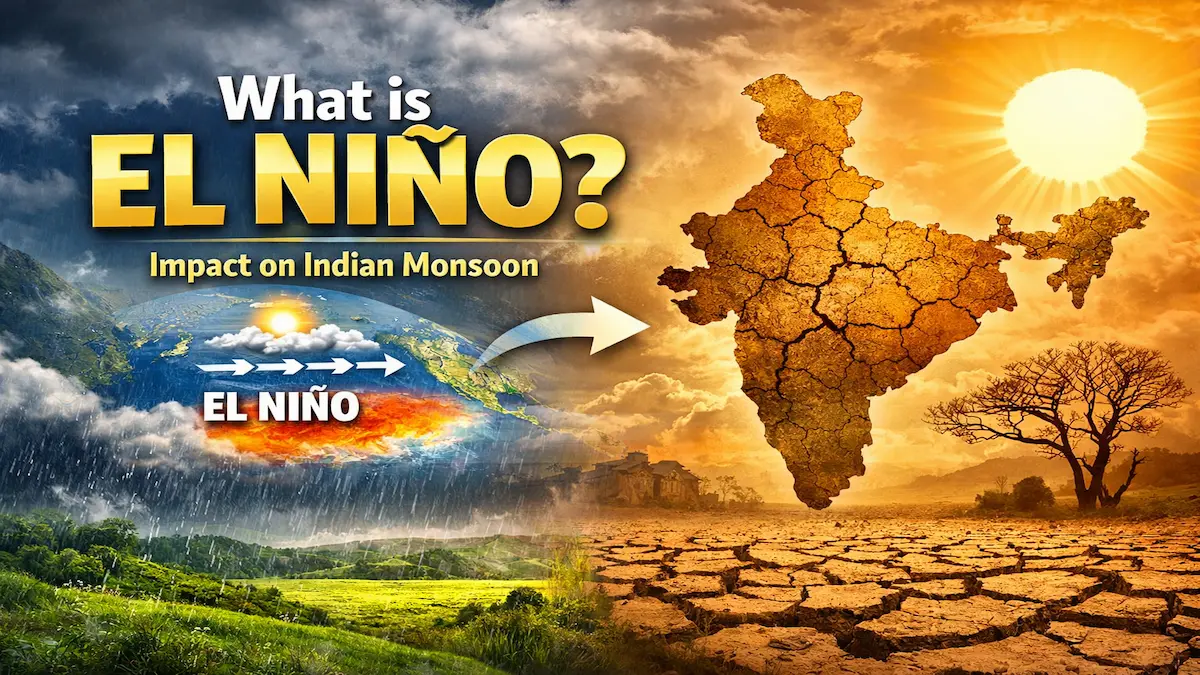
El Niño is one of the most important climate phenomena that directly influences global weather patterns, especially the Indian monsoon. Every few years, this ocean-atmosphere event develops in the Pacific Ocean and can significantly affect rainfall, agriculture, and temperatures across India.
Understanding El Niño is crucial today, as changing climate patterns are making its effects more intense and unpredictable.
What is El Niño?
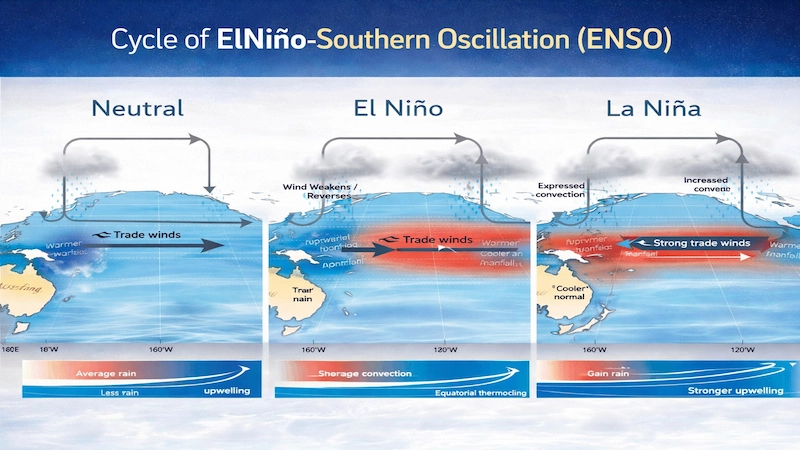
El Niño is a climate phenomenon that occurs when the surface waters of the central and eastern Pacific Ocean become unusually warm. It is part of a larger cycle called the El Niño-Southern Oscillation (ENSO).
Normally, trade winds push warm water towards Asia, allowing cold water to rise near South America. However, during El Niño, these winds weaken or reverse, causing warm water to shift eastward.
This shift disrupts global weather systems, including rainfall patterns, temperatures, and storms.
How El Niño Affects the Indian Monsoon
India’s monsoon is highly sensitive to ocean temperatures, and El Niño often weakens it. Here’s how:
- Reduced Rainfall: El Niño typically leads to below-normal rainfall in India, increasing the risk of drought.
- Delayed Monsoon: The onset of the southwest monsoon may be delayed.
- Uneven Distribution: Some regions receive very little rain, while others may experience irregular showers.
- Agricultural Impact: Crop yields decline due to insufficient water, affecting farmers and food supply.
- Heatwaves: El Niño years often bring higher temperatures and prolonged heatwaves.
However, it’s important to note that not every El Niño year results in drought, but the probability increases significantly.
Why El Niño Matters More Today
With climate change intensifying weather extremes, El Niño events are becoming more impactful. Warmer global temperatures can amplify its effects, leading to:
- Stronger heatwaves across India
- Increased water shortages
- Stress on agriculture and rural economy
- Higher risk of extreme weather events
In recent years, India has seen fluctuating monsoon patterns, partly linked to changing ocean conditions.
El Niño vs La Niña: Key Difference
While El Niño warms ocean waters, La Niña is its opposite phase:
- El Niño: Warmer Pacific waters → weaker monsoon
- La Niña: Cooler Pacific waters → stronger monsoon and higher rainfall in India
Both phases are part of the ENSO cycle and alternate every few years.
El Niño is a powerful climate driver that plays a critical role in shaping India’s monsoon. From reduced rainfall to rising temperatures, its impact can be felt across agriculture, water resources, and daily life.
As climate patterns continue to evolve, tracking El Niño events has become essential for better planning and preparedness in India.
For more latest updates on Trending News, Automobile, Education, Technology, Jobs, weather and sports visit IndicDaily.