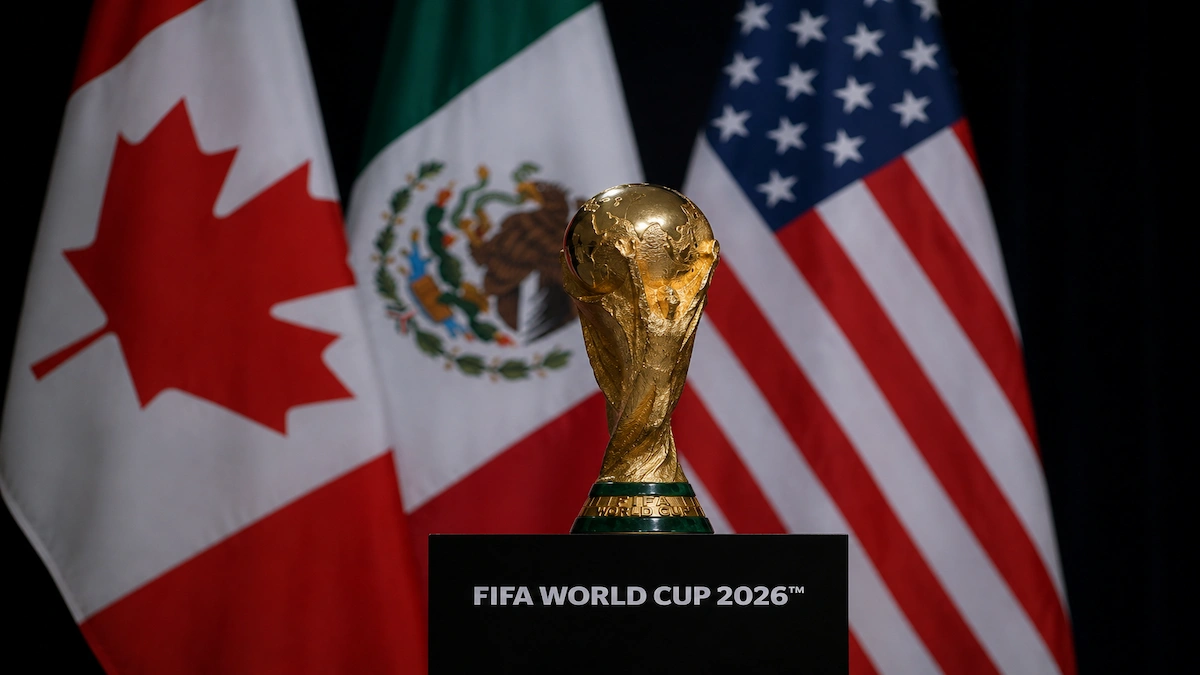
The global football landscape is stepping into an entirely unprecedented era. The FIFA World Cup 2026 is not just another iteration of the world’s most-watched sporting event—it is a historic, record-shattering spectacle. For the first time in history, the tournament is being co-hosted by three sovereign nations: the United States, Canada, and Mexico.
Operating under the unified banner slogan “United As One,” this event marks the grand return to a traditional Northern Hemisphere summer schedule. Running from June 11 to July 19, 2026, the month-long competition completely redefines the scale of international sports. From structural tournament expansions to multi-continental logistical operations, this article breaks down absolutely everything you need to know about the mega-event.
The Mega Expansion: Unpacking the New 48-Team Format
For nearly three decades—ever since the 1998 edition in France—the FIFA World Cup operated under a highly familiar 32-team system. The 2026 tournament officially shatters that convention by expanding the grid to 48 competing nations.
This 50% increase in participants means more continental representation, more global exposure, and a significantly longer, more grueling road to the championship trophy.
The 12-Group Structure
Instead of the classic 8 groups of four, the 48 qualified teams are split into 12 groups (Group A through Group L), consisting of 4 teams each.
The Introduction of the Round of 32
The expansion brings a thrilling twist to the high-stakes knockout phase. Historically, only the top two teams from each group advanced directly to a Round of 16. In 2026, a brand-new knockout tier is introduced: The Round of 32.
- The top two teams from all 12 groups will automatically book their spot in the knockouts (24 teams).
- They will be joined by the eight best third-placed teams across the groups.
This means 32 out of the 48 teams will survive the initial group filter, raising the total number of matches from the traditional 64 up to a staggering 104 matches. To lift the iconic golden trophy, the eventual world champion will now have to navigate 8 total games instead of the historical 7.
Key Tournament Dates & Phase Timelines
Spanning 39 action-packed days, the tournament timeline is structured to keep fans engaged without overloading the physical capacities of the 1,248 professional players involved.
| Tournament Stage / Phase | Calendar Dates (2026) | Operational Window |
| Opening Match | June 11, 2026 | Estadio Azteca, Mexico City |
| Group Stage Matchdays | June 11 – June 27, 2026 | 17 Days of Non-stop Football |
| Round of 32 | June 28 – July 3, 2026 | First Knockout Elimination |
| Round of 16 | July 4 – July 7, 2026 | High-Octane Battles |
| Quarter-finals | July 9 – July 11, 2026 | Elite Eight Showdowns |
| Semi-finals | July 14 – July 15, 2026 | Broadcaster Peak Windows |
| Third-place Playoff | July 18, 2026 | Bronze Medal Positioning |
| The World Cup Final | July 19, 2026 | MetLife Stadium, New Jersey |
Host Nations & The 16 World-Class Venues
Because no single nation could easily support the massive infrastructure required to hold 104 high-capacity games simultaneously, the combined cross-border bid became a logistical necessity.
Every single stadium chosen for the 2026 tournament is an existing, operational marvel—averaging a seating capacity well above 60,000—meaning no host country had to build speculative “white elephant” arenas from scratch.
The United States is managing the vast majority of the tournament load, hosting 78 matches, while Canada and Mexico will each put on 13 matches. From the quarterfinals onward, every single knockout game will take place exclusively in the US.
To minimize exhausting flight times for traveling squads, support staff, and fans, FIFA grouped the 16 distinct stadiums into three regional geographic clusters:
1. The Western Cluster
- Vancouver, Canada: BC Place (52,497 capacity)
- Seattle, USA: Lumen Field (66,925 capacity)
- San Francisco Bay Area, USA: Levi’s Stadium (68,827 capacity)
- Los Angeles, USA: SoFi Stadium (70,492 capacity)
2. The Central Cluster
- Guadalajara, Mexico: Estadio Akron (45,664 capacity)
- Mexico City, Mexico: Estadio Azteca (80,824 capacity)
- Monterrey, Mexico: Estadio BBVA (51,243 capacity)
- Houston, USA: NRG Stadium (68,777 capacity)
- Dallas, USA: AT&T Stadium (70,649 capacity) — Host of 9 total matches, including a semi-final.
- Kansas City, USA: Arrowhead Stadium (69,045 capacity)
3. The Eastern Cluster
- Atlanta, USA: Mercedes-Benz Stadium (68,239 capacity) — Host of a semi-final.
- Miami, USA: Hard Rock Stadium (64,478 capacity)
- Toronto, Canada: BMO Field (43,036 capacity)
- Boston, USA: Gillette Stadium (64,146 capacity)
- Philadelphia, USA: Lincoln Financial Field (68,324 capacity)
- New York / New Jersey, USA: MetLife Stadium (80,663 capacity) — The grand venue for the Final.
Official Groups & Blockbuster Fixtures
The group stage draw has served up highly competitive pods, blending historic heavyweights with exciting tournament debutants like Curaçao, Uzbekistan, Cabo Verde, and Jordan.
The 12 Official Groups
- Group A: Mexico, South Korea, South Africa, Czechia
- Group B: Canada, Bosnia and Herzegovina, Qatar, Switzerland
- Group C: Brazil, Morocco, Haiti, Scotland
- Group D: United States, Paraguay, Australia, Türkiye
- Group E: Germany, Côte d’Ivoire, Ecuador, Curaçao
- Group F: Netherlands, Japan, Sweden, Tunisia
- Group G: Belgium, Egypt, IR Iran, New Zealand
- Group H: Spain, Uruguay, Saudi Arabia, Cabo Verde
- Group I: France, Senegal, Norway, Iraq
- Group J: Argentina, Algeria, Austria, Jordan
- Group K: Portugal, Colombia, Uzbekistan, Congo DR
- Group L: England, Croatia, Ghana, Panama
Prime Group-Stage Matches to Watch (India Standard Time – IST)
Because the tournament is set in North America, fans in India will need to prepare for late-night viewing and early-morning wake-up calls. The tournament kicks off in the early hours of June 12 in India. Below are five can’t-miss marquee group stage clashes configured directly to India Standard Time (IST):
1. Mexico vs. South Africa (The Opening Match)
- Group: Group A
- Date (IST): June 12, 2026
- Kick-off Time: 12:30 AM IST
- Why watch: The historic opening ceremony and inaugural match live from the iconic Estadio Azteca in Mexico City.
2. Brazil vs. Morocco
- Group: Group C
- Date (IST): June 14, 2026
- Kick-off Time: 3:30 AM IST
- Why watch: The record five-time world champions face off against the technical defensive brilliance of Morocco—the history-making African semi-finalists from the previous edition.
3. England vs. Croatia
- Group: Group L
- Date (IST): June 18, 2026
- Kick-off Time: 1:30 AM IST
- Why watch: A modern, intense European football rivalry featuring highly structured midfields and premier tactical chess between two perennial title contenders.
4. Uruguay vs. Spain
- Group: Group H
- Date (IST): June 27, 2026
- Kick-off Time: 5:30 AM IST
- Why watch: A classic clash of footballing philosophies. Spain’s high-possession passing style goes head-to-head against Uruguay’s famous high-pressing style.
5. Portugal vs. Colombia
- Group: Group K
- Date (IST): June 28, 2026
- Kick-off Time: 5:00 AM IST
- Why watch: A fast-paced intercontinental matchup that promises plenty of goals and could easily determine who tops Group K heading into the newly formed Round of 32.
Logistical Challenges & The Cross-Border Travel Factor
Executing a tournament across three countries presents unique operational challenges. Teams face immense travel distances between games, creating a true test of physical endurance.
While FIFA’s regional clustering system tries to keep squads localized, the sheer size of the continent means long flights are unavoidable for some teams. For instance, Bosnia and Herzegovina faces the longest group-stage travel itinerary of the tournament. They start their campaign in Toronto, Canada, fly over 3,500 kilometers to Los Angeles for their second match, and then make another 1,500-kilometer trip up to Seattle for their final group game.
Additionally, managing different border security, visa processes, and custom checks for thousands of international fans traveling across the US, Canada, and Mexico makes this the most complex logistical operation in sports history.
Defending Champions & Tournament Favorites
Defending world champions Argentina, who captured their historic third star in Qatar, enter the 2026 campaign with a highly experienced squad. However, the path to retaining the title is steeper than ever.
Global powerhouses like France, Spain, Brazil, and England boast deep squads perfectly suited to handle the grueling, 8-match tournament format. With the expanded 48-team bracket leaving less margin for error in the knockout rounds, the stage is perfectly set for unexpected underdogs to shake up the tournament.
The countdown has officially ended. Ensure your streaming setups and morning schedules are ready—the beautiful game is about to take over the world like never before!
Stay Ahead with IndicDaily
Loved this comprehensive tournament breakdown? IndicDaily.com brings you sharp, simplified updates on global sports events, trending international news, and major cultural moments.
- Bookmark IndicDaily.com to make sure you never miss a trending story.
- Share this article on WhatsApp and social media with your fellow football fans!
Also Read: 15-Year-Old Wonderkid! Vaibhav Sooryavanshi Bio: Age, Net Worth, & His Mind-Blowing Cricket Journey
FAQs: FIFA World Cup 2026
-
How does the new 48-team format work for the 2026 World Cup?
The 2026 edition marks a major transition, expanding from the traditional 32 teams to 48 competing nations. The teams are divided into 12 groups of four. While everyone still plays three group matches, the big change comes next: instead of cutting the field in half, the group stage trims the field down to 32. The top two teams from all 12 groups, along with the eight best third-placed teams, advance to a brand-new knockout round—the Round of 32.
-
When and where is the opening match of the 2026 FIFA World Cup?
The tournament officially kicks off today, June 11, 2026. The historic opening match features co-hosts Mexico taking on South Africa at the legendary Estadio Azteca in Mexico City. For fans watching in India, the match will air in the early hours of Friday, June 12, 2026, at 12:30 AM IST.
-
Where will the 2026 FIFA World Cup Final be played?
The grand final of the tournament is scheduled for July 19, 2026, at MetLife Stadium in East Rutherford, New Jersey (which will be officially referred to as the New York New Jersey Stadium during the tournament to comply with FIFA’s corporate naming guidelines). For viewers in India, the final will broadcast live on July 20, 2026.
-
Which countries are making their FIFA World Cup debut in 2026?
The expansion to 48 teams has thrown the doors open for fresh international talent. Four nations are making their historic, first-ever appearance at a FIFA World Cup in this edition: Uzbekistan (coached by Italian icon Fabio Cannavaro), Jordan, Cabo Verde, and Curaçao (which officially becomes the smallest nation by population ever to reach a World Cup final).
-
How many total matches will be played, and how many wins are needed to lift the trophy?
Because of the expanded format, the total number of tournament matches has skyrocketed from 64 to a massive 104 matches played across 39 days. This means the eventual world champion will have to survive a much longer gauntlet, playing 8 total matches (3 group stage games and 5 knockout games) to lift the trophy, compared to the 7 matches required in previous tournaments.