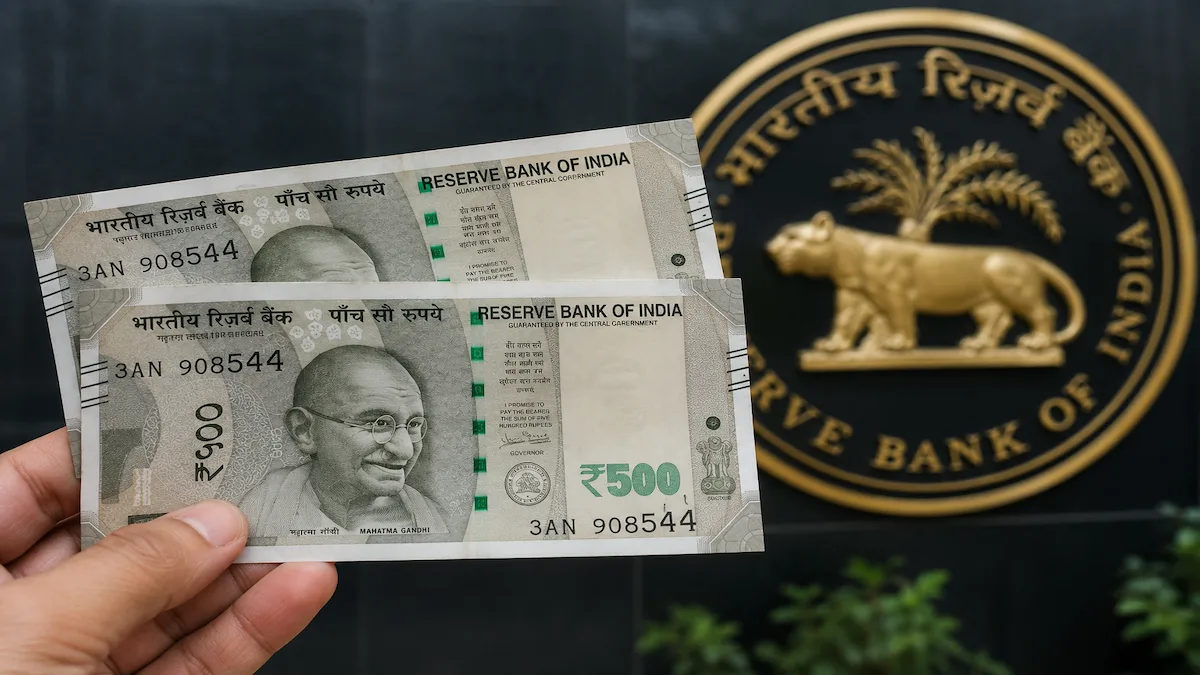
If you have recently spent time scrolling through WhatsApp, X, or YouTube, you have likely run into a sensational viral claim: The Reserve Bank of India (RBI) is completely withdrawing all paper currency and swapping it for brand-new plastic notes.
Some viral posts even claimed a hard deadline of June 30, 2026, featuring AI-generated images of a modified ₹500 note lacking Mahatma Gandhi’s photograph. The massive sudden surge of online rumors has created significant confusion among citizens, traders, and small business owners regarding the future of their hard cash.
To protect your wallet and clarify the confusion, IndicDaily has broken down what the government’s official fact-checkers are saying, what the RBI is actually planning, and how plastic banknotes operate.
Fact Check: Is Your Paper Cash Being Replaced on June 30?
Let’s address the elephant in the room immediately: No, the RBI is not withdrawing paper currency, and no sudden cash swap is happening.
The Press Information Bureau (PIB) Fact Check unit officially debunked the viral social media messages, declaring them completely false and fake. The central bank has issued absolutely no directive to invalidate your existing paper notes. Your ₹10, ₹20, ₹50, ₹100, and ₹500 paper bills remain 100% legal tender. The viral videos circulating online are digitally altered clips designed to cause panic.
The Reality: Why the RBI is Rethinking Polymer (Plastic) Notes
While the “ban on paper cash” is a rumor, the underlying concept is rooted in real policy discussions. RBI Governor Sanjay Malhotra recently confirmed that the central bank is actively evaluating a preliminary proposal to introduce polymer (plastic) banknotes into the Indian economy on a highly controlled, trial basis.
Even with the massive growth of digital payment infrastructure like UPI, physical cash usage in India remains incredibly high. According to the RBI’s annual report, the value of banknotes in circulation jumped 11.9% to reach a massive ₹41.23 trillion.
Managing this vast mountain of paper money comes with immense administrative expenses. The RBI is taking a look at polymer alternatives for three specific reasons:
1. Surging Printing and Maintenance Costs
Printing traditional cotton-pulp paper currency is expensive. The national expenditure on printing banknotes shot up to ₹6,372.8 crore in the previous financial year. Paper notes wear out fast, accumulate dirt, and easily tear. In fact, billions of damaged or “soiled” banknotes have to be pulled out of circulation and destroyed by the RBI every single year, with lower denominations like ₹10 and ₹20 wearing out the fastest.
2. Lifespan and Durability
Polymer banknotes are made from a thin, flexible, synthetic plastic substrate. They are completely waterproof, resistant to dust and moisture, and almost impossible to rip apart by hand. While they cost slightly more to print initially, they last 2 to 5 times longer than standard paper currency. This durability cuts down long-term replacement printing bills drastically.
3. Advanced Counterfeit Protection
Banknote security remains a critical issue for the banking regulator. Polymer notes allow central banks to build complex, high-tech security features directly into the note itself. These include transparent see-through windows, color-shifting holograms, and specialized inks that are incredibly difficult for local counterfeiters to replicate.
Paper vs. Polymer: How Do They Compare?
To understand how a transition might affect everyday handling, it helps to look at how these two materials stack up against each other:
| Feature / Metric | Traditional Paper Banknotes | Modern Polymer (Plastic) Banknotes |
| Material Base | Cotton-bale pulp and specialized linen | Thin, flexible plastic substrate (Polymer) |
| Average Lifespan | 1 to 2 years (For smaller, high-frequency notes) | 5 to 10 years (Significantly more durable) |
| Texture & Feel | Standard rough, fibrous paper feel | Smooth, slightly slippery non-porous texture |
| Water Resistance | Absorbs moisture; easily damaged by water | 100% waterproof and wipeable |
| Security Tech | Traditional watermarks and security threads | Transparent windows, micro-holograms |
Global Adoption: Which Countries Already Use Plastic Cash?
If India adopts plastic cash in the future, it won’t be the first to do so. Over 60 countries globally have transitioned either fully or partially to polymer banknotes.
- Australia pioneered the technology, rolling out the world’s first full series of plastic banknotes back in 1988.
- The United Kingdom (UK) completely transitioned its £5, £10, £20, and £50 notes to polymer.
- Other major economies utilizing plastic currency include Canada, Singapore, New Zealand, Malaysia, and Vietnam.
What Lies Ahead for India’s Cash Ecosystem?
Moving a massive cash-reliant population to an entirely new currency material is an operational challenge. Back in 2014, India attempted a small-scale trial by planning a release of 1 billion pieces of plastic ₹10 notes across five distinct climatic zones (Shimla, Jaipur, Bhubaneswar, Mysore, and Kochi) to see how plastic survived Indian heat and humidity. That early trial faced severe operational roadblocks.
Today, banking technology has evolved. Modern ATMs and automated sorting machines are fully capable of handling polymer notes without jamming. However, any future rollout by the RBI will be a slow, phased pilot project restricted to a specific small denomination to study real-world wear and tear.
The Bottom Line: Don’t let viral social media rumors panic you. Your paper cash is perfectly safe, and no immediate changes are coming to your wallet. The RBI is simply exploring modern technology to make physical currency more durable, secure, and cost-effective over the coming decade.
Stay Informed with IndicDaily
Tired of viral fake news and misleading rumors? IndicDaily.com brings you immediate, fact-checked breakdowns of India’s latest banking regulations, financial news, and policy updates.
- Bookmark IndicDaily.com for clean, hype-free news.
- Share this article on your family WhatsApp groups to stop the spread of currency rumors!
Also Read: EPFO 3.0: How to Withdraw Your PF Money Instantly via UPI (2026 Guide)
FAQs: RBI Plastic Banknotes Rumors
-
Is the RBI replacing all paper currency with plastic notes by June 30, 2026?
No, the claim that the RBI is phasing out all paper currency by June 30, 2026, is completely fake. The Press Information Bureau (PIB) Fact Check unit explicitly debunked the viral videos, confirming that the central bank has issued no such directive. All existing paper currency notes remain 100% legal tender, and your cash is entirely safe to use.
-
What did RBI Governor Sanjay Malhotra say about introducing plastic notes?
Following the central bank’s monetary policy discussions, RBI Governor Sanjay Malhotra confirmed that the introduction of polymer (plastic) notes is only in a preliminary evaluation stage. The central bank is weighing the long-term lifecycle costs, printing expenses, and durability benefits of plastic film substrate over traditional cotton pulp. No final launch roadmap or official implementation dates have been finalized.
-
Why is the RBI planning a pilot project for polymer (plastic) currency?
The primary driver behind the proposal is reducing the long-term cost of managing cash. While India’s digital payments ecosystem via UPI processed over 24,000 crore transactions in the last fiscal year, physical currency in circulation actually jumped to a record ₹41.23 trillion. Because traditional paper notes get soiled, torn, or damaged quickly—especially lower denominations like ₹10 and ₹20—the RBI spends thousands of crores annually just to print replacements. Polymer notes last up to five times longer, significantly cutting down these recurring maintenance expenses.
-
Will existing ATMs in India be able to dispense plastic banknotes?
Yes. Unlike the early trial phases conducted over a decade ago which faced major handling roadblocks, modern automated teller machines (ATMs) and banking sorting infrastructure have evolved significantly. While a full rollout would require minor calibration for weight and thickness differences, current automated banking networks are fully capable of seamlessly identifying, counting, and dispensing polymer-based banknotes without jamming.
-
How can I verify if an announcement about Indian currency changes is real or fake?
To avoid falling for digitally altered videos or misleading messages on social media, always verify currency news through official channels. Check the Press Information Bureau (PIB) Fact Check portal or look for official press releases directly on the Reserve Bank of India’s official website. You can also report any suspicious banking or policy claims directly to the PIB Fact Check team via email or their official WhatsApp helpline.