Fuel prices in India have become one of the most discussed economic issues in recent years. From daily commuters to large industries, everyone feels the pressure whenever petrol and diesel prices rise. Understanding the reason for fuel price increase in India explained clearly can help citizens know why these changes happen and how they affect the economy.
India is one of the world’s fastest-growing economies, and fuel plays a major role in transportation, manufacturing, agriculture, and daily life. Even a small increase in fuel prices can lead to inflation and affect millions of households. In this detailed article, we will explore the major causes behind rising fuel prices in India in simple and easy language.
Introduction to Fuel Price Rise in India
Fuel prices in India are influenced by several domestic and international factors. Petrol and diesel are not priced randomly. Their prices depend on crude oil costs, taxes, transportation expenses, refining charges, currency exchange rates, and market demand.
Over the last decade, Indians have seen repeated hikes in petrol and diesel prices. These increases are often linked to global events such as wars, oil production cuts, or economic recovery after crises.
India imports nearly 85% of its crude oil requirement from other countries. This heavy dependence on imports makes the country highly sensitive to international oil market changes.
Understanding How Fuel Prices Are Decided
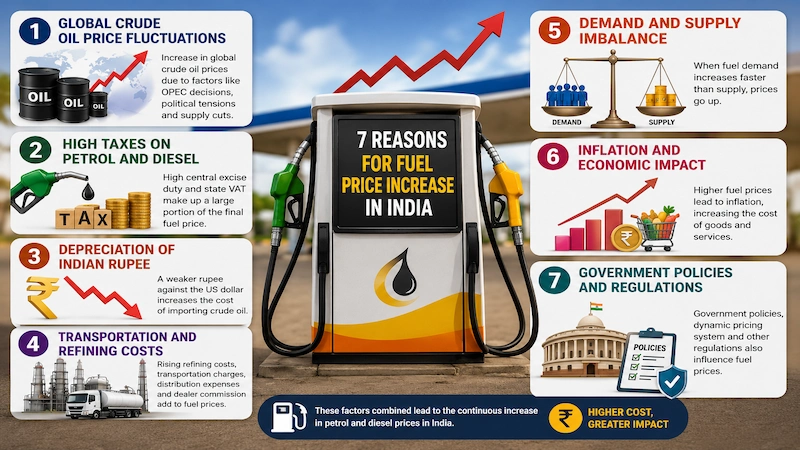
To understand the reason for fuel price increase in India explained, it is important to know how fuel prices are calculated.
Role of Crude Oil
Crude oil is basically the raw material which is used to produce petrol and diesel. India imports crude oil mainly from countries in the Middle East. When crude oil prices rise globally, the cost of refining petrol and diesel also increases.
The international crude oil market is extremely volatile. Prices can change daily depending on geopolitical tensions, global demand, and production levels.
Import Dependency
India depends heavily on imported oil because domestic production is limited. Since payments for imported oil are made in US dollars, any increase in dollar value also raises fuel costs in India.
This dependency means India has little control over global oil pricing trends.
Global Crude Oil Price Fluctuations
One of the biggest reasons for rising fuel prices is the fluctuation in international crude oil prices.
OPEC Decisions
The Organization of the Petroleum Exporting Countries (OPEC) controls a major portion of global oil production. When OPEC countries reduce oil production, global supply decreases, causing prices to rise.
Countries like Saudi Arabia, Iraq, and the UAE play a significant role in determining global oil prices.
International Conflicts
Wars and political tensions also affect fuel prices. Conflicts in oil-producing regions disrupt supply chains and create uncertainty in global markets.
For example:
- Russia-Ukraine conflict increased crude oil prices globally
- Middle East tensions affected oil transportation
- Economic sanctions on oil-producing countries reduced supply
Such events directly impact Indian fuel prices.
High Taxes on Petrol and Diesel
Taxes are another major reason behind expensive fuel in India.
Central Government Excise Duty
The Union government imposes excise duty on diesel and petrol. These taxes contribute significantly to government revenue.
During periods of economic stress, governments may increase fuel taxes to compensate for reduced income from other sectors.
State VAT
Apart from central taxes, state governments also impose Value Added Tax (VAT) on fuel. VAT rates differ from state to state.
This is why petrol prices vary across cities like Delhi, Mumbai, Chennai, and Kolkata.
In some states, taxes make up nearly 40% to 50% of the final fuel price paid by consumers.
Depreciation of Indian Rupee
The value of the Indian rupee against the US dollar strongly affects fuel prices.
Since crude oil is purchased in dollars, a weaker rupee means India must pay more for imports.
For example:
- If crude oil costs $80 per barrel
- And the rupee weakens from ₹75 to ₹85 per dollar
- India pays significantly more even if crude prices remain unchanged
Currency depreciation therefore increases import costs and fuel prices.
Transportation and Refining Costs
Fuel does not directly reach consumers after crude oil import. It must go through several stages.
These include:
- Refining crude oil into petrol and diesel
- Transportation through pipelines and tankers
- Distribution to fuel stations
- Dealer commissions
Rising transportation costs, higher refinery expenses, and increased labor costs all contribute to fuel price hikes.
India’s growing infrastructure and logistics expenses also affect final retail fuel rates.
Demand and Supply Imbalance
Fuel prices rise when demand becomes higher than supply.
During economic recovery periods, industries, transport services, and consumers use more fuel. Increased demand pushes prices upward.
For example:
- Post-pandemic economic recovery increased global fuel demand
- Industrial production growth boosted diesel consumption
- Increased vehicle ownership raised petrol demand
If oil-producing nations fail to increase supply accordingly, prices rise rapidly.
Inflation and Economic Impact
Fuel prices and inflation are closely connected.
When fuel becomes expensive:
- Transportation costs rise
- Food delivery costs increase
- Manufacturing becomes costlier
- Public transport fares go up
As a result, prices of goods and services also increase.
This creates a chain reaction across the economy.
Impact on Daily Life
Common people face several challenges due to fuel inflation:
- Higher grocery prices
- Expensive travel
- Increased electricity bills
- Rising school transportation fees
Middle-class and low-income families are usually affected the most.
Government Policies and Regulations
Government decisions also influence fuel prices.
India adopted a dynamic fuel pricing system in 2017. Under this system, petrol and diesel prices are revised daily based on international crude oil rates and currency fluctuations.
While this system increases transparency, it also means consumers experience frequent price changes.
Environmental regulations and clean fuel initiatives can also increase refining costs.
Impact of Fuel Price Increase on Common People
The rise in fuel prices affects almost every citizen directly or indirectly.
Household Budget Pressure
Families spend more money on:
- Petrol for personal vehicles
- Cooking gas transportation
- Daily commuting
- Goods and services
This reduces savings and increases financial stress.
Transportation Sector
Truck operators, taxi drivers, and public transport providers face increased operational costs.
As fuel becomes expensive:
- Bus fares increase
- Cab prices rise
- Delivery charges become higher
This affects both businesses and consumers.
How Fuel Prices Affect Businesses
Businesses across sectors depend on fuel.
Industries use fuel for:
- Transportation
- Manufacturing
- Power generation
- Supply chain operations
Higher fuel costs increase production expenses, reducing profit margins.
Small businesses suffer the most because they have limited financial flexibility.
E-commerce companies, logistics firms, airlines, and agriculture sectors are heavily affected by rising fuel prices.
Measures Taken by Government
The Indian government occasionally takes steps to control fuel prices.
Some measures include:
Reduction in Excise Duty
The government may reduce central taxes during periods of high inflation.
Subsidies
Although fuel subsidies have reduced over time, targeted support is sometimes provided for specific sectors.
Strategic Oil Reserves
India maintains emergency oil reserves to handle supply disruptions.
Promotion of Ethanol Blending
Blending ethanol with petrol reduces crude oil dependency and supports domestic agriculture.
Future of Fuel Prices in India
Fuel prices in India are likely to remain sensitive to global developments.
Key future factors include:
- Global crude oil demand
- Renewable energy adoption
- Electric vehicle growth
- Government taxation policies
- Geopolitical tensions
India is gradually investing in alternative energy sources to reduce oil dependency.
However, petrol and diesel will continue to play a major role for many years.
Alternative Energy Solutions
To reduce the impact of rising fuel prices, India is focusing on cleaner and renewable energy.
Electric Vehicles (EVs)
Electric vehicles are becoming more popular due to lower operating costs and environmental benefits.
Solar Energy
India is investing heavily in solar power projects to reduce fossil fuel dependence.
Biofuels
Biofuels such as ethanol and biodiesel offer cleaner alternatives to traditional fuels.
Public Transportation Improvements
Expanding metro networks and electric buses can reduce individual fuel consumption.
You can learn more about India’s energy initiatives from the official website of the Ministry of Petroleum and Natural Gas
Frequently Asked Questions (FAQs)
-
Why are fuel prices so high in India?
Fuel prices are high due to international crude oil prices, heavy taxation, import dependency, and currency fluctuations.
-
Does the government control petrol prices in India?
Fuel prices are mostly market-linked under the dynamic pricing system, but taxes and policies still influence rates.
-
Why do petrol prices differ between states?
Different states impose different VAT rates, causing price variations across India.
-
How does crude oil affect fuel prices?
Crude oil is the main raw material for petrol and diesel. Higher crude prices increase fuel production costs.
-
How do fuel prices impact inflation?
Higher fuel prices increase transportation and production costs, leading to overall inflation.
Understanding the reason for fuel price increase in India explained requires examining multiple economic and global factors together. Fuel prices are not determined by a single issue. Instead, they are influenced by crude oil prices, government taxes, exchange rates, transportation costs, geopolitical tensions, and market demand.
India’s heavy reliance on imported oil makes it vulnerable to global market fluctuations. At the same time, taxes on fuel contribute significantly to government revenue, making price reductions challenging.
The long-term solution lies in reducing oil dependency through renewable energy, electric vehicles, and improved public transportation systems. As India moves toward cleaner energy alternatives, the impact of fuel price fluctuations may gradually decrease.
For now, fuel prices remain an important economic indicator that affects households, businesses, and the nation’s overall growth.
For more latest updates on Trending News, Entertainment, Automobile, Education, Technology, Jobs, weather and sports visit IndicDaily.