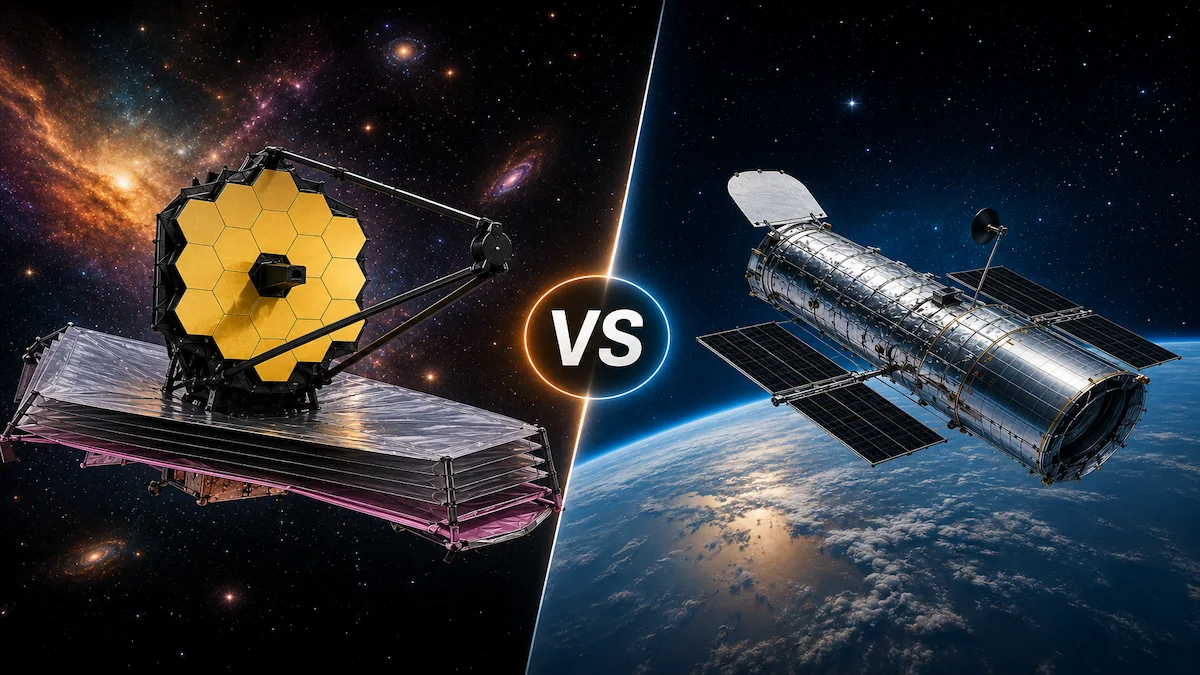
Space exploration has always fascinated humanity. From ancient stargazers to modern astronomers, humans have continuously searched for answers hidden in the universe. Two of the most important tools in this journey are the James Webb Space Telescope and the famous Hubble Space Telescope. Both telescopes changed astronomy forever, but they work in very different ways.
The James Webb Space Telescope represents the next generation of space observation. While Hubble showed us breathtaking images of galaxies and nebulae, JWST is designed to go even deeper into space and further back in time.
In this article, we’ll explore how these two powerful telescopes differ, what makes each one unique, and why scientists believe JWST could unlock some of the universe’s biggest mysteries.
Introduction to Space Telescopes
Space telescopes are scientific instruments placed outside Earth’s atmosphere to observe celestial objects clearly. Unlike ground-based telescopes, they avoid atmospheric distortion, clouds, and light pollution.
These telescopes help scientists study:
- Galaxies
- Stars
- Planets
- Black holes
- Cosmic radiation
- The origins of the universe
The Hubble Space Telescope dominated space observation for over 30 years. Now, the James Webb Space Telescope is taking astronomy to an entirely new level.
What Is the James Webb Space Telescope?
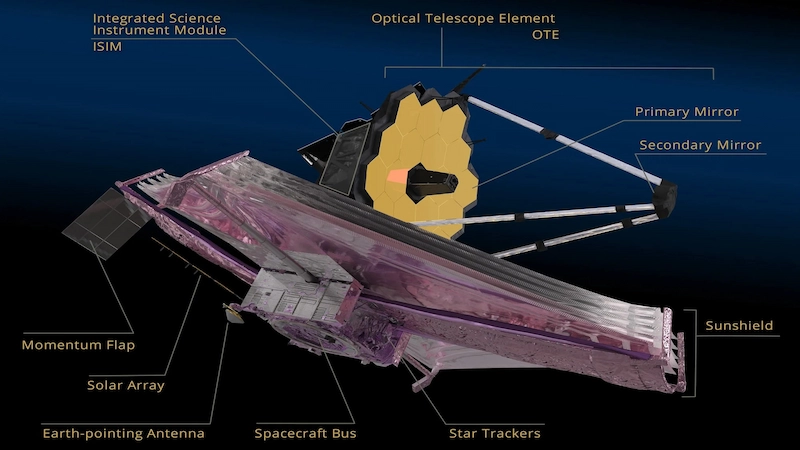
The James Webb Space Telescope (JWST) is the world’s most advanced space observatory. It was developed by NASA in partnership with the European Space Agency and the Canadian Space Agency.
JWST launched on December 25, 2021, aboard an Ariane 5 rocket from French Guiana. It was designed to answer major questions about the universe, including:
- How the first galaxies formed
- How stars and planets are born
- Whether life may exist on distant exoplanets
Mission and Purpose of JWST
The telescope primarily studies infrared light. This allows it to see through cosmic dust and detect extremely distant objects invisible to Hubble.
Its goals include:
- Observing the earliest galaxies
- Analyzing exoplanet atmospheres
- Studying black holes
- Understanding cosmic evolution
Launch and Development History
The project took nearly 30 years to complete and cost over $10 billion. Engineers faced enormous challenges because the telescope had to unfold perfectly in space after launch.
One failure could have ended the mission completely. Fortunately, JWST deployed successfully and began sending stunning images back to Earth in 2022.
What Is the Hubble Space Telescope?
The Hubble Space Telescope launched in 1990 and quickly became one of the greatest scientific instruments ever built.
Named after astronomer Edwin Hubble, Hubble transformed our understanding of the cosmos.
Unlike JWST, Hubble mainly observes visible and ultraviolet light.
Hubble’s Historic Mission
Hubble orbits Earth at an altitude of about 547 kilometers. Astronauts from the NASA serviced and upgraded it multiple times using the Space Shuttle program.
These repair missions greatly extended its life.
Key Achievements of Hubble
Hubble has achieved many historic breakthroughs:
- Captured the famous Deep Field images
- Helped determine the age of the universe
- Discovered evidence of supermassive black holes
- Observed distant galaxies billions of light-years away
Its breathtaking images inspired millions worldwide.
James Webb Space Telescope vs Hubble Telescope: Main Differences
Here is where things become truly exciting. Although both telescopes study space, they are very different in design, mission, and technology.
Mirror Size Comparison
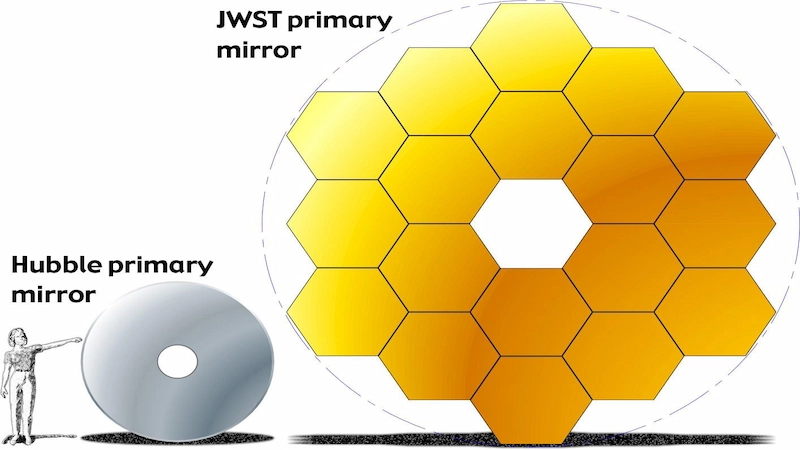
One major difference is mirror size.
The Hubble Telescope has a mirror measuring 2.4 meters across.
The James Webb Space Telescope has a massive segmented mirror measuring 6.5 meters.
This larger mirror allows JWST to collect much more light and observe fainter objects.
Infrared vs Visible Light Observation
This is perhaps the biggest difference.
Hubble mainly studies:
- Visible light
- Ultraviolet light
- Some near-infrared wavelengths
JWST mainly studies infrared light.
Infrared observation helps JWST:
- See through dust clouds
- Detect colder objects
- Observe ancient galaxies
Because the universe is expanding, light from distant galaxies stretches into infrared wavelengths. That makes JWST ideal for studying the early universe.
Orbit Locations
Hubble orbits Earth directly.
JWST travels much farther away to a point called Lagrange Point 2 (L2), around 1.5 million kilometers from Earth.
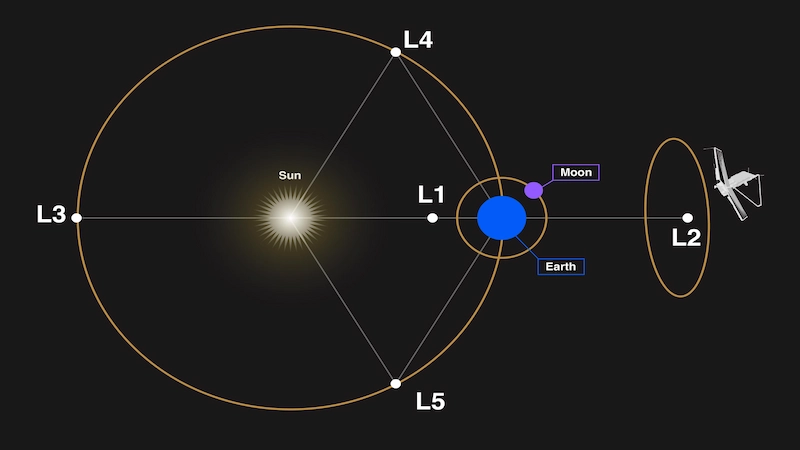
This location helps keep the telescope extremely cold, which is essential for infrared observation.
Technology and Instruments
JWST includes cutting-edge instruments like:
- Near Infrared Camera (NIRCam)
- Mid-Infrared Instrument (MIRI)
- Near Infrared Spectrograph (NIRSpec)
These tools are far more advanced than Hubble’s original systems.
Hubble was revolutionary for its time, but JWST represents a new generation of engineering.
Why the James Webb Space Telescope Is Revolutionary
The James Webb Space Telescope is changing astronomy in ways scientists only dreamed about.
Looking Back in Time
JWST can observe galaxies formed shortly after the Big Bang.
Because light takes time to travel, looking deeper into space means looking further into the past.
Scientists believe JWST may reveal the universe as it appeared over 13 billion years ago.
Exploring Exoplanets
JWST can study atmospheres of distant exoplanets.
By analyzing atmospheric gases, scientists can search for signs of:
- Water vapor
- Carbon dioxide
- Methane
- Potential biosignatures
This could help answer one of humanity’s greatest questions: Are we alone?
Studying the Birth of Stars
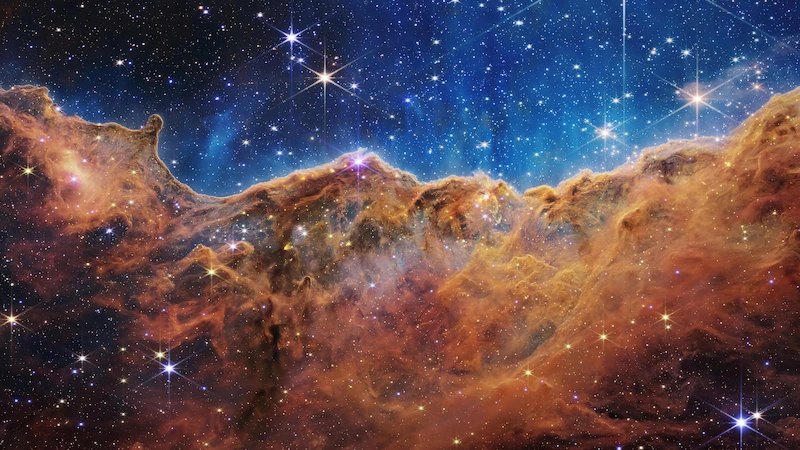
Infrared technology allows JWST to see inside dense dust clouds where stars form.
Hubble struggled to see through these regions clearly.
JWST reveals incredible details about stellar nurseries and planetary systems.
Major Discoveries Made by Hubble
Even though JWST is more advanced, Hubble remains one of the most successful scientific missions ever.
Deep Field Images
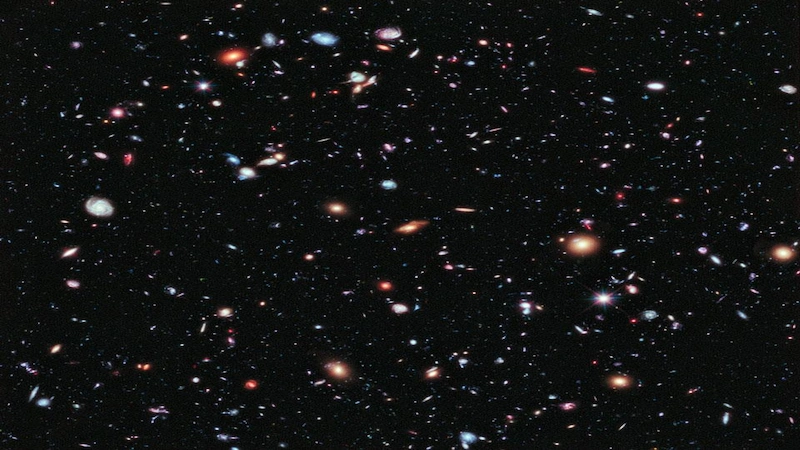
Hubble’s Deep Field images changed astronomy forever.
By staring at tiny dark areas of space for long periods, Hubble discovered thousands of galaxies previously unseen.
These images showed the universe is far larger and more crowded than expected.
Expansion of the Universe
Hubble helped scientists refine measurements of the universe’s expansion rate.
This research contributed to discoveries involving dark energy.
Black Hole Research
Hubble provided strong evidence that supermassive black holes exist at the centers of galaxies.
This discovery transformed modern astrophysics.
How JWST and Hubble Work Together
Interestingly, the telescopes are not competitors.
Instead, they complement each other.
Hubble excels at visible and ultraviolet observation, while JWST specializes in infrared astronomy.
Together they provide a broader understanding of the cosmos.
Scientists often combine observations from both telescopes to create detailed studies of galaxies and stars.
Challenges Faced by Both Telescopes
Engineering Challenges
Building these telescopes required incredible precision.
JWST faced major risks because it unfolded in space using hundreds of moving parts.
Hubble initially suffered from a mirror flaw that blurred images until astronauts repaired it in 1993.
Cost and Maintenance
Hubble benefited from human servicing missions.
JWST is too far away for astronaut repairs using current technology.
That means every system had to work perfectly from the start.
Future of Space Observation
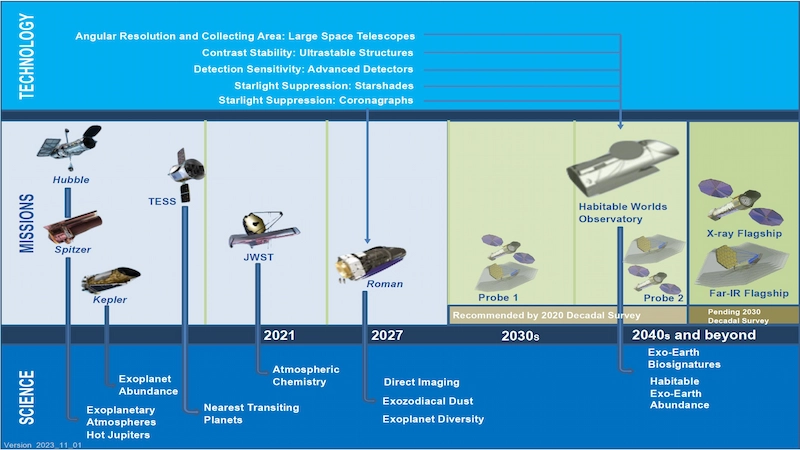
The future of astronomy looks incredibly bright.
JWST is expected to operate for over 20 years. Scientists hope it will uncover:
- The first stars in the universe
- New planetary systems
- Clues about dark matter
- Possible habitable worlds
Future telescopes may become even more powerful.
Projects like the Nancy Grace Roman Space Telescope are already in development.
For official mission details, visit NASA James Webb Space Telescope.
Comparison Table: JWST vs Hubble
| Feature | Hubble Space Telescope | James Webb Space Telescope |
|---|---|---|
| Launch Year | 1990 | 2021 |
| Main Observation Type | Visible & UV Light | Infrared Light |
| Mirror Size | 2.4 meters | 6.5 meters |
| Orbit | Around Earth | Lagrange Point 2 |
| Serviceable by Astronauts | Yes | No |
| Main Goal | General Astronomy | Early Universe & Infrared Study |
| Temperature | Warmer | Extremely Cold |
| Technology Level | Older Generation | Next Generation |
FAQs
-
Why is the James Webb Space Telescope better than Hubble?
The James Webb Space Telescope has a larger mirror and advanced infrared technology, allowing it to observe deeper into space and further back in time.
-
Can JWST replace Hubble completely?
No. Hubble still provides valuable visible and ultraviolet observations that JWST cannot fully replace.
-
How far away is JWST from Earth?
JWST operates about 1.5 million kilometers away at Lagrange Point 2.
-
What is the biggest discovery expected from JWST?
Scientists hope JWST may detect signs of habitable conditions or even biosignatures on distant exoplanets.
-
Why does JWST use gold mirrors?
Gold reflects infrared light extremely well, improving observation quality.
The Hubble Space Telescope opened humanity’s eyes to the beauty and scale of the cosmos. It transformed astronomy and inspired generations.
Now, the James Webb Space Telescope is pushing exploration even further. Its advanced infrared technology, massive mirror, and powerful instruments allow scientists to study the earliest moments of the universe and search for clues about life beyond Earth.
Together, Hubble and JWST represent two of humanity’s greatest scientific achievements. They remind us that the universe is still full of mysteries waiting to be discovered.
Also Read: Nanaimoteuthis Mystery Revealed: Ancient Giant Sea Predator That Ruled Prehistoric Oceans
For more latest updates on Trending News, Automobile, Education, Technology, Jobs, weather and sports visit IndicDaily.