
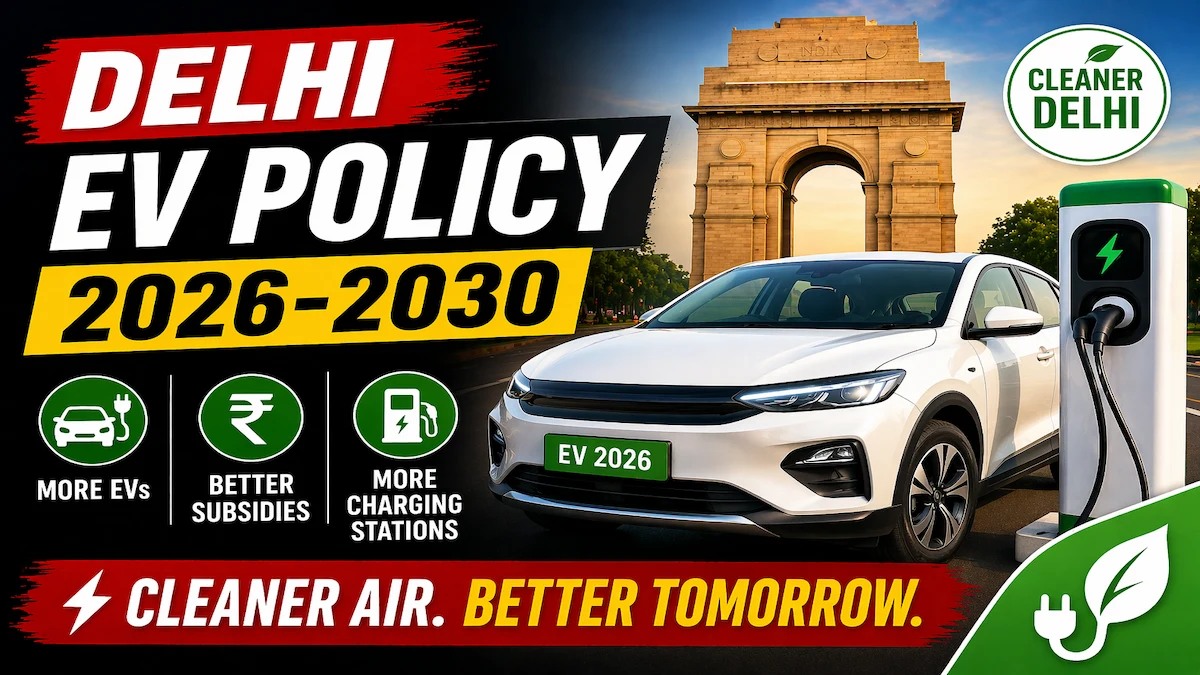
The Delhi Government is set to roll out its ambitious Electric Vehicle (EV) Policy 2026–2030, aiming to accelerate the adoption of clean mobility and reduce pollution levels in the national capital. The new policy is expected to build on the success of the earlier EV policy and introduce stronger incentives along with stricter regulations on petrol and diesel vehicles.
According to initial details, the policy targets a significant increase in EV adoption, with the government aiming for over 90% of new vehicle registrations to be electric by 2030. This marks a major push toward transforming Delhi into one of the leading EV hubs in India.
One of the key highlights of the policy is the continuation and expansion of subsidies on electric two-wheelers, three-wheelers, and four-wheelers. Buyers can expect financial incentives in the form of upfront purchase subsidies, road tax exemptions, and registration fee waivers. Special focus is being given to commercial vehicles and last-mile delivery fleets, which contribute significantly to urban pollution.
The policy also proposes phasing out CNG auto-rickshaws and fossil fuel-based commercial vehicles in a gradual manner. In their place, electric autos and delivery vehicles will be promoted through dedicated schemes and easier financing options.
To support this transition, the Delhi Government plans to expand charging infrastructure across the city. Thousands of new charging stations are expected to be installed in residential areas, commercial complexes, and public spaces, ensuring easy access for EV users.
Another important aspect of the policy is the introduction of scrappage incentives for old petrol and diesel vehicles. Owners who switch to electric vehicles may receive additional benefits, encouraging faster replacement of polluting vehicles.
The government is also focusing on job creation and local manufacturing, with plans to boost EV-related industries, battery recycling, and skill development programs.
Experts believe that this policy could play a crucial role in tackling Delhi’s severe air pollution problem while reducing dependence on fossil fuels. However, challenges such as infrastructure readiness and affordability will remain key factors in determining its success.
Overall, the Delhi EV Policy 2026–2030 signals a strong commitment toward a cleaner and greener future, with aggressive targets, expanded subsidies, and a clear roadmap for transitioning to electric mobility.
Read more in detail : Delhi EV Policy 2026–2030: Petrol Vehicle Ban, Subsidy Details & EV Targets Explained
For more latest updates on Trending News, Automobile, Education, Technology, Jobs, weather and sports visit IndicDaily.