If you have scrolled through Instagram Reels or YouTube Shorts over the past few weeks, you have definitely encountered a bizarrely infectious track that begins with the lines, “Meri Chai Ki Tapri Pe…” accompanied by the catchy tagline “Oye Hoye Kya Scene Hai!”. The viral anthem song has practically taken over the digital landscape, soundtracking thousands of meme videos on Instagram and YouTube, dance trends, and comedy sketches.
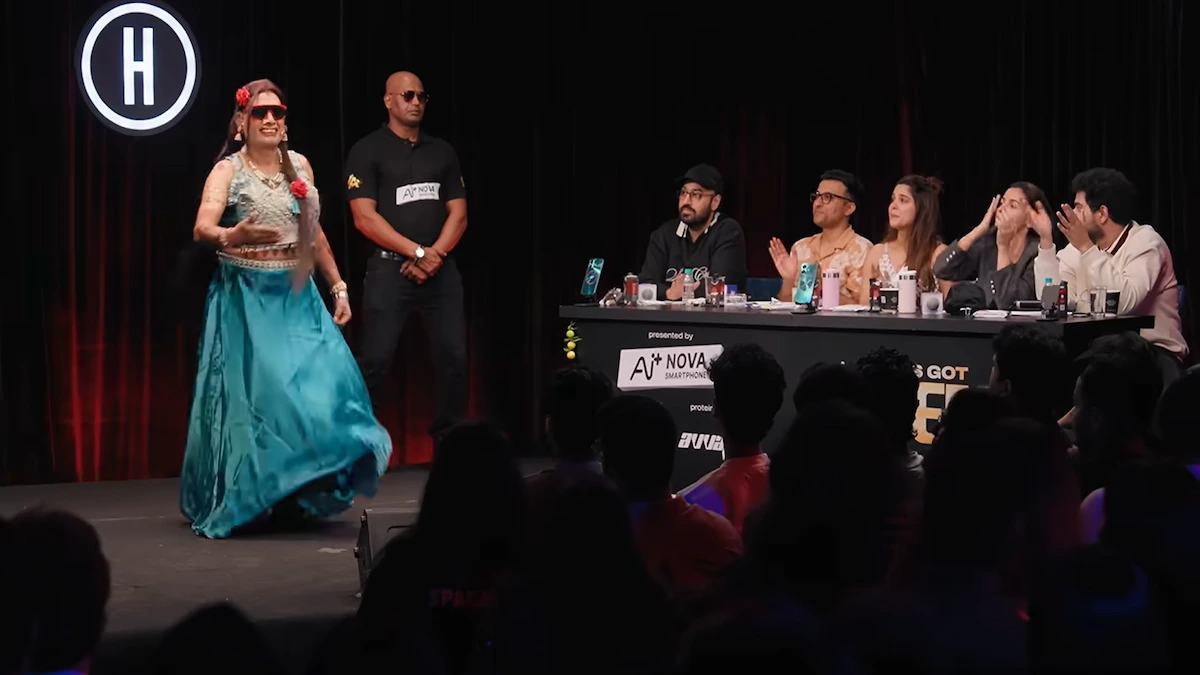
Known widely across social media networks as the Ballu Harami track, this chaotic piece of hip-hop and rap-infused comedy music owes its explosive rise to a massively popular internet talent show: Samay Raina’s India’s Got Latent. Specifically emerging from the premiere of Season 2, Episode 1, the song has instantly transformed from a local regional Jabalpur based performance into a pan-India viral phenomenon.
But who is Ballu Harami? What is the story behind Chai Ki Tapri Pe? And, most importantly, is this viral audio a purely human-composed track or an AI-generated digital illusion?
Who is Ballu Harami? Unpacking the Virtual Persona
The name “Ballu Harami” has become an umbrella title for the entire viral meme trend surrounding the track. However, the background of this performance reveals a collaborative effort of regional artists thrust into the national spotlight via the YouTube ecosystem.
According to web sources and entertainment reports tracking the viral audio, the live execution and performance of the track are linked to regional creators, notably Rocking Goli (Balram Vishwakarma) and composer/producer Young AJ. The raw, unhinged, and fiercely energetic Jabalpuri style of writing gives the track its iconic street-smart “harami” edge.
When the raw concept and performance made their debut on Samay Raina’s India’s Got Latent, the internet recognized the track’s latent comedic potential. The show, which highlights raw, unfiltered, and deeply unconventional talents, proved to be the perfect launcher. The judges and live audience were immediately hooked by the sheer absurdity and confidence of the delivery, prompting viewers to crop the audio clip and upload it directly onto streaming platforms. Within 24 hours of the episode airing, “Ballu Harami” became a trending search keyword nationwide.
The Anatomy of a Viral Hit: “Chai Ki Tapri Pe”
What makes Chai Ki Tapri Pe so incredibly addictive? The song relies on simple, deeply rooted subcontinental pop-culture imagery mixed with raw, rhythmic hip-hop beats.
The localized concept of a Chai Ki Tapri—the ubiquitous roadside tea stall found on every Indian street corner—serves as the setting for the track’s narrative. By taking a highly relatable, everyday social hub and layering it with hyper-energetic rap bars, street slang, and an anthemic hook line (Oye Hoye Kya Scene Hai), the creators engineered a perfect recipe for internet virality.
The track functions brilliantly as a “meme anthem”. Its high-energy tempo provides creators with the perfect background beat to transition between video frames, while the chaotic and humorous lyricism adds a layer of ironic comedy to any piece of short-form visual content.
Lyrics
Oye Hoye Kya Scene Hai
Teri Walk Mein Taan Hai
Mere Chai Ki Tapri Pe
Sabki Nazar Jaan Hai
Tu Hila De Mood Ko
Main Hilaun Floor Ko
Kaan Mein Bol Baby
Aaj Kar Rahe Thoda Aur
Aankh Mein Kaajal Bharke
Aaja Aaja Mat Ruk
Nainon Se Tu Signal De
Phir Se Kar De Dhoom Dhoom
Ballu Ke Pyaar Mein Ek Pagal Si Ladki Thi
Baat Karti Ballu Se Aur Pyaar Sabse Karti Thi
Mila Ballu Maine Bola Baat Ko Samajh
Aur Bola Ballu Maine Uski Baat Mein Na Lag
Ye Jabalpur Hai Shehar Aati Badi Badi Lehar
Aur Aisi Chatak Patak Ladkiyan Par Ballu Na Maana
Usne Pyaar Mein Wo Sab Kiya Jo Aap Karte Hain
Gali Se Roz Guzar Te Hain
Kabhi Call Karte Hain To Kabhi Pair Padte Hain
Aur Na Bane Baat To Phir Karte Hain Shaadi
Par Apna Ballu Haraami Piya Ghaat Ghaat Ka Paani
Phir Gaya Ghar Wahan Pe Hua Sab Jo Nahin Hona Tha
Maine Pehle Hi Bola Tha
Ye Jabalpur Hai Shehar Aati Badi Badi Lehar
Aur Aisi Chatak Patak Ladkiyan
Oye Hoye Kya Scene Hai
Teri Walk Mein Taan Hai
Mere Chai Ki Tapri Pe
Sabki Nazar Jaan Hai
Tu Hila De Mood Ko
Main Hilaun Floor Ko
Kaan Mein Bol Baby
Aaj Kar Rahe Thoda Aur
Aankh Mein Kaajal Bharke
Aaja Aaja Mat Ruk
Nainon Se Tu Signal De
Phir Se Kar De Dhoom Dhoom
Ballu Ke Pyaar Mein Ek Pagal Si Ladki Thi
Baat Karti Ballu Se Aur Pyaar Sabse Karti Thi
Mila Ballu Maine Bola Baat Ko Samajh
Aur Bola Ballu Maine Uski Baat Mein Na Lag
Ye Jabalpur Hai Shehar Aati Badi Badi Lehar
Aur Aisi Chatak Patak Ladkiyan Par Ballu Na Maana
Usne Pyaar Mein Wo Sab Kiya Jo Aap Karte Hain
Gali Se Roz Guzar Te Hain
Kabhi Call Karte Hain To Kabhi Pair Padte Hain
Aur Na Bane Baat To Phir Karte Hain Shaadi
Par Apna Ballu Haraami Piya Ghaat Ghaat Ka Paani
Phir Gaya Ghar Wahan Pe Hua Sab Jo Nahin Hona Tha
Maine Pehle Hi Bola Tha
Ye Jabalpur Hai Shehar Aati Badi Badi Lehar
Aur Aisi Chatak Patak Ladkiyan….
AI-Generated vs. Human Composed: The Digital Truth
As the song’s popularity exploded, streaming platforms like Spotify, Apple Music, and YouTube Music were flooded with multiple iterations of Chai Ki Tapri Pe. Listeners quickly noticed that different versions carried different artist credits, ranging from “Recorded by Soundverse” and “Audio Agni” to listings under labels like Anuranan Music. This fragmentation sparked intense debate across online communities: Is Ballu Harami’s hit a genuine human composition, or is it an AI-generated product?
The Source of the Confusion: The AI Surge
The core confusion stems from how the track spread after its initial India’s Got Latent showcase. When the raw performance first went viral, official studio files were not immediately available to the public. Sensing a massive demand, dozens of digital creators and internet users turned to generative AI music tools (such as Suno AI, Udio, or Soundverse) to recreate, polish, and expand the raw snippet heard on the show.
This resulted in an influx of AI-assisted remixes, including:
- High-speed and slowed-and-reverbed lo-fi variants.
- Female vocal versions using voice-cloning technology.
- Aggressive boom-bap hip-hop adaptations using automated backing tracks.
The Human Reality Behind the Core Composition
According to sources dissecting the song’s origin, the foundational track, lyrics, and core melody are human-composed. The track represents genuine regional street art crafted by local music producers like Young AJ, who engineered the signature groove to match the unique cadence of the live performance.
Therefore, while the version you hear on an official music video or a specific artist page is the product of real human songwriting and production, a significant percentage of the hundreds of spin-off tracks circulating on audio platforms are indeed AI-generated extensions uploaded by third-party creators looking to capitalize on search traffic.
Cultural Impact: Why “India’s Got Latent” Changes the Music Game
The explosion of Ballu Harami highlights a major shift in how hit music is discovered in India. Historically, an artist needed major Bollywood backing, a big-budget music video, or a massive label push to achieve nationwide fame. Today, platforms like India’s Got Latent bypass the traditional gatekeepers entirely.
By providing unfiltered creators a massive, highly engaged platform, the show transforms raw, hyper-local comedic energy into mainstream digital gold. Chai Ki Tapri Pe demonstrates that modern internet audiences value raw authenticity, relatability, and meme-worthy humor far above polished, commercial production values.
The Era of the Overnight Meme Anthem
Whether you view it as a brilliant piece of subcontinental parody rap or simply a chaotic internet phase, there is no denying the cultural footprint of Ballu Harami’s Chai Ki Tapri Pe. By combining the everyday aesthetic of India’s roadside tea stalls with sharp comedic timing and the viral machinery of modern short-form video apps, the track has solidified its spot as a standout viral anthem.
As the boundaries between human composition and AI-driven distribution continue to blur, tracks like this show us exactly how the future of internet music will look: unpredictable, highly collaborative, and undeniably entertaining.
For more latest updates on Trending News, Entertainment, Automobile, Education, Technology, Jobs, weather and sports visit IndicDaily.
FAQs: The Ballu Harami Viral Trend
-
Who originally created the “Ballu Harami” song?
The song emerged as a breakout performance on Samay Raina’s comedy talent show, India’s Got Latent (Season 2, Episode 1). Reports track the foundational composition and execution back to regional creators, including Rocking Goli (Balram Vishwakarma) and producer Young AJ.
-
Is “Chai Ki Tapri Pe” fully AI-generated?
No, the core song, lyrics, and baseline melodies are human-composed and originated from a live show performance. However, because the original track went viral instantly, many of the variations, slowed-and-reverbed tracks, and extended loops found on audio streaming apps are AI-generated versions made by independent internet creators.
-
What is the meaning behind the phrase “Oye Hoye Kya Scene Hai”?
The phrase translates locally to “Wow, what a great scene/vibe!” It is used as a high-energy hook line in the rap track to punctuate the chaotic, street-smart humor of the lyrics.
-
Why are there so many different artists listed for this song on Spotify and YouTube Music?
Because multiple independent uploaders used AI tools to quickly recreate, loop, or remix the audio from the viral show clip, they distributed their own custom versions under various artist handles (like Soundverse or Audio Agni) to capture trending search results.